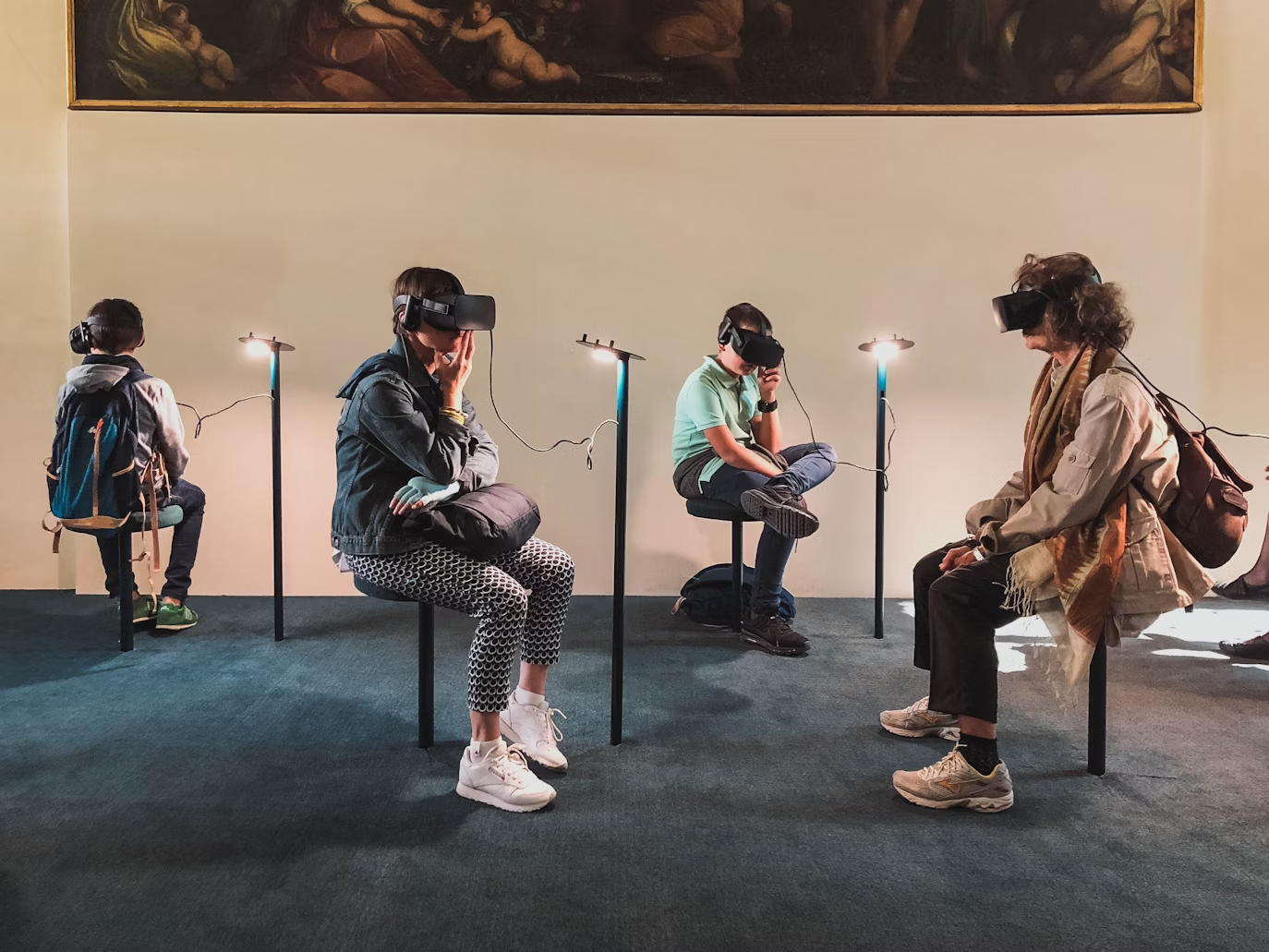
Virtual Reality (VR) is no longer a futuristic technology reserved for gaming and entertainment; it has emerged as a transformative tool in various sectors, with one of its most promising applications being in education and training. By immersing users in interactive, 3D environments, VR has the potential to enhance learning experiences, making them more engaging, effective, and memorable. The impact of VR on education and training is profound, allowing learners to experience simulations of real-world scenarios, practice skills, and engage with content in ways that traditional methods cannot match.
In this article, we will explore how VR is revolutionizing the education and training landscape, the benefits it brings, and the challenges that need to be addressed for its widespread adoption.
1. Immersive Learning Experiences
One of the most significant advantages of VR in education is its ability to create immersive learning experiences. Traditional education often relies on textbooks, lectures, and visual aids to teach complex subjects. While these methods can be effective, they lack the ability to engage students in a meaningful way. VR changes that by placing students directly inside an interactive learning environment, enabling them to experience and explore concepts firsthand.
For instance, in science education, students can step inside a virtual human body and explore its organs, tissues, and systems in detail. In history classes, learners can “travel” to ancient civilizations and witness historical events unfold in real-time. This level of immersion not only deepens students’ understanding of the material but also makes learning more memorable. By engaging multiple senses—sight, sound, and even touch—VR ensures that students retain information more effectively than with traditional methods.
2. Hands-On Training in Risk-Free Environments
In vocational training, particularly in fields where hands-on experience is crucial, VR allows learners to practice their skills in a safe, controlled, and risk-free environment. This is especially beneficial in industries such as healthcare, aviation, and engineering, where real-life training scenarios can be costly, dangerous, or logistically challenging.
For example, medical students can practice performing surgeries using VR simulations, honing their skills without the need for live patients. Similarly, aviation students can train to fly airplanes in a virtual cockpit, navigating various weather conditions, emergency situations, and flight maneuvers, all without ever leaving the ground. These experiences allow learners to make mistakes, learn from them, and improve their performance without the high stakes of real-world consequences.
3. Remote Learning and Accessibility
With the global shift toward remote learning, VR has proven to be an invaluable tool for providing students with access to high-quality educational experiences regardless of their location. Virtual classrooms, where students from different parts of the world can gather, discuss, and collaborate in real-time, are becoming a reality. This is especially important in regions where access to quality education is limited due to geographic or socio-economic constraints.
In addition, VR enables learners with physical disabilities or other barriers to education to engage with content in ways that were previously impossible. For example, students with mobility challenges can explore museums, historical sites, or even visit other countries without leaving their homes. By removing physical and geographical limitations, VR opens up opportunities for learners to access experiences they would not have otherwise had.
4. Personalized Learning and Self-Paced Education
Another key advantage of VR in education is the personalization it offers. Traditional educational systems often rely on a one-size-fits-all approach, where students are expected to keep pace with the curriculum regardless of their individual needs or learning styles. VR allows for self-paced learning, where students can interact with content at their own speed, revisit concepts they may not have fully understood, and proceed when they feel ready.
For example, in language learning, students can engage in VR scenarios where they practice speaking and listening skills in different real-world environments, such as ordering food in a restaurant or navigating a foreign city. The immersive nature of VR ensures that learners are not just memorizing vocabulary but actively applying it in context. This individualized approach helps cater to diverse learning styles, from visual to kinesthetic learners, and encourages greater student engagement.
5. Enhancing Collaboration and Teamwork
While VR can provide solitary learning experiences, it also has the potential to enhance collaboration and teamwork. In traditional classrooms, students often work on projects together, but they are usually limited by physical proximity. VR takes collaboration to the next level by allowing students to interact with each other in virtual spaces, regardless of their physical location. This is particularly important in globalized education, where students from different parts of the world can come together in virtual spaces to collaborate on projects.
In business training, VR is used to create virtual environments where teams can work together to solve problems, practice decision-making, and engage in strategic planning exercises. This kind of collaborative training helps develop communication, leadership, and problem-solving skills—critical competencies in today’s workplace.
6. Cost-Effective Training for Businesses
For businesses and corporations, VR offers a cost-effective solution to employee training. Traditional training methods often require expensive materials, instructors, and sometimes even travel expenses. In contrast, VR can provide standardized, repeatable training scenarios that are available at any time, reducing costs in the long run.
For example, companies in industries like manufacturing, retail, and customer service can use VR simulations to train employees on specific tasks, such as handling machinery, dealing with customer complaints, or ensuring safety protocols are followed. VR allows companies to deliver consistent training across different locations, ensuring that all employees are equally well-prepared for their roles.
7. Challenges and Barriers to Adoption
Despite the numerous benefits, the adoption of VR in education and training faces several challenges. The most obvious is the cost. High-quality VR headsets and software can be expensive, and not all educational institutions or businesses have the budget to invest in this technology. Additionally, creating immersive VR content tailored to specific subjects or industries requires significant time, expertise, and resources.
Another challenge is technology adoption. Not all students, instructors, or employees are comfortable with VR, and the learning curve can be steep for those unfamiliar with the technology. For VR to be truly effective, educators and trainers must be adequately trained to use it, and learners must feel comfortable engaging with the content.
Lastly, the issue of motion sickness can be a barrier for some users. While VR technology has improved over the years, some individuals still experience discomfort or nausea when using VR headsets for extended periods. Developers are working to address these issues, but it remains an ongoing challenge for widespread adoption.
The impact of Virtual Reality on education and training is undeniable. From offering immersive learning experiences to providing hands-on practice in risk-free environments, VR is changing the way we learn and acquire new skills. While there are challenges to overcome—such as cost, accessibility, and technology adoption—the potential benefits far outweigh the obstacles.
As VR technology continues to evolve and become more affordable, its integration into educational and training programs is likely to increase. In the future, students and workers will be able to explore and interact with the world in ways that were once unimaginable, making learning more engaging, effective, and accessible than ever before. By embracing VR, we are not just enhancing education and training—we are transforming the way we learn for the better.