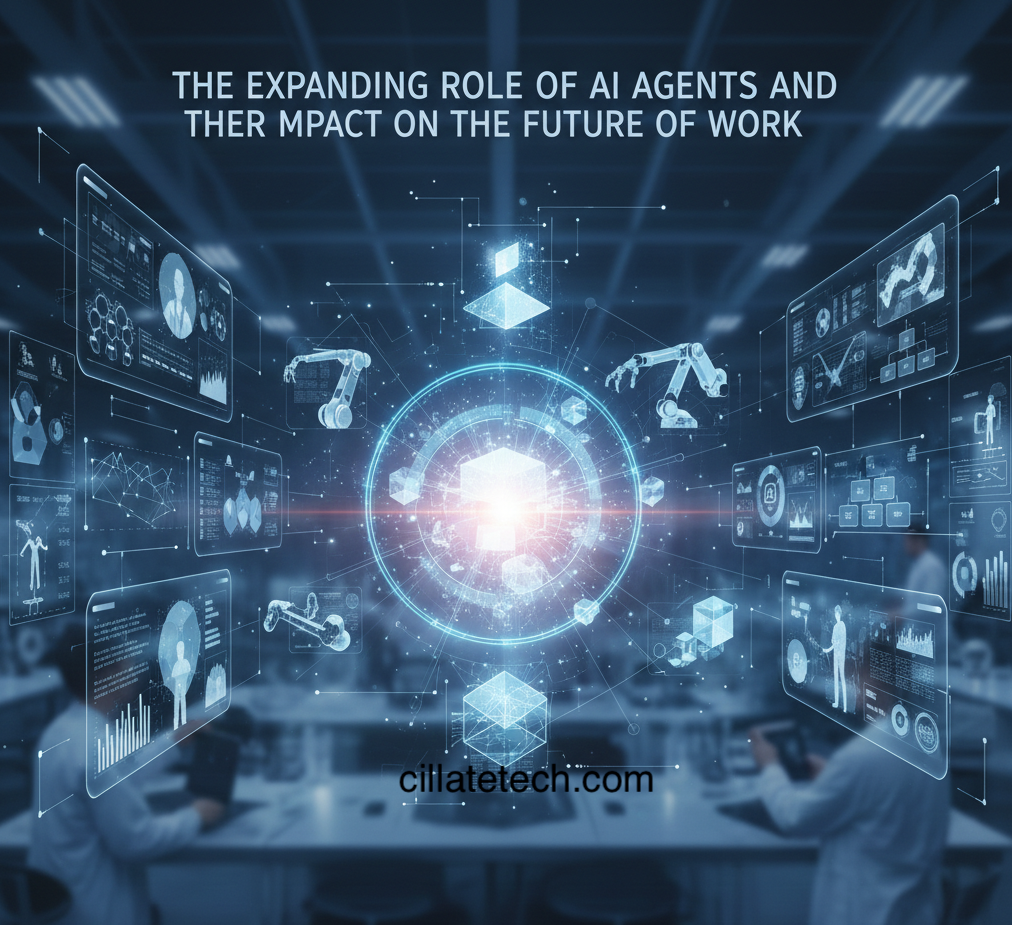
Artificial intelligence has moved beyond simple task automation into a new phase defined by autonomy and adaptability. At the center of this shift are AI agents—intelligent systems capable of independently planning, executing, and optimizing tasks. These autonomous technologies are changing not only how organizations operate, but also how work itself is structured. As businesses across industries adopt AI-driven solutions to remain competitive, AI agents are increasingly influencing productivity, job design, and decision-making. Understanding their role is essential for anticipating how the workplace will evolve in the coming years.
Understanding AI Agents
AI agents are advanced software entities designed to act independently in pursuit of defined objectives. Unlike conventional AI tools that rely on constant user input, AI agents can assess situations, make informed decisions, and carry out multi-step actions with minimal supervision. They are commonly used in areas such as customer support automation, software development, data analysis, workflow management, and enterprise operations. Their ability to learn from outcomes and adjust behavior over time makes them far more flexible than traditional automated systems.
From Automation to Autonomy
Earlier automation technologies focused on repeating predefined instructions. AI agents represent a fundamental shift by introducing reasoning and adaptability into digital workflows. Instead of simply following rules, these systems evaluate goals, respond to changing conditions, and continuously improve performance. This evolution allows organizations to automate complex and dynamic processes, including those that previously required human judgment. As a result, AI agents are increasingly capable of supporting knowledge-based and strategic tasks rather than just routine operations.
How AI Agents Are Changing the Way We Work
One of the most visible effects of AI agents is the transformation of job roles. Rather than eliminating the need for human workers, AI agents are altering responsibilities. Employees are spending less time on repetitive or administrative tasks and more time on creative thinking, problem-solving, and leadership. AI agents also significantly enhance productivity. Their ability to operate continuously, analyze large datasets quickly, and reduce errors enables teams to accomplish more in less time. This efficiency is especially valuable in fast-paced and data-intensive industries. In addition, AI agents contribute to improved decision-making. By processing real-time information and identifying patterns, they support more accurate and timely business insights. This capability is increasingly important in sectors such as finance, healthcare, logistics, and technology. The rise of remote and hybrid work has further accelerated the adoption of AI agents. Autonomous systems help coordinate distributed teams by managing schedules, tracking progress, and maintaining operational consistency across locations and time zones.
Skills for an AI-Driven Workplace
As AI agents become embedded in everyday work, the skills required in the labor market are also evolving. Technical familiarity with AI systems is becoming a foundational requirement across many roles. At the same time, human-centric skills such as critical thinking, creativity, communication, and ethical judgment are growing in importance. Workers who can effectively collaborate with AI agents—by interpreting outputs, validating decisions, and guiding strategic direction—will be especially valuable. Continuous learning and adaptability are likely to define long-term career success in this new environment.
Challenges and Ethical Considerations
Despite their advantages, AI agents present several challenges. Concerns around job displacement, algorithmic bias, data privacy, and accountability remain central to discussions about autonomous systems. Over-dependence on AI without adequate human oversight can also introduce operational and ethical risks. To address these issues, organizations must implement responsible AI practices. This includes transparent system design, clear governance policies, ongoing monitoring, and a commitment to keeping humans involved in critical decisions.
What the Future Holds
The future of work is likely to be shaped by collaboration between humans and AI agents. Rather than functioning as replacements, autonomous systems will increasingly act as digital collaborators that enhance human capabilities. This hybrid workforce model has the potential to drive innovation, improve efficiency, and create new types of roles. Organizations that proactively integrate AI agents while investing in workforce development will be better positioned to succeed in an increasingly intelligent and automated economy.
Finally
AI agents are redefining how work is performed, managed, and optimized. Their growing autonomy and intelligence are reshaping industries and altering expectations of productivity and skills. By understanding their impact and preparing thoughtfully for their adoption, businesses and professionals can navigate the future of work with confidence and resilience.