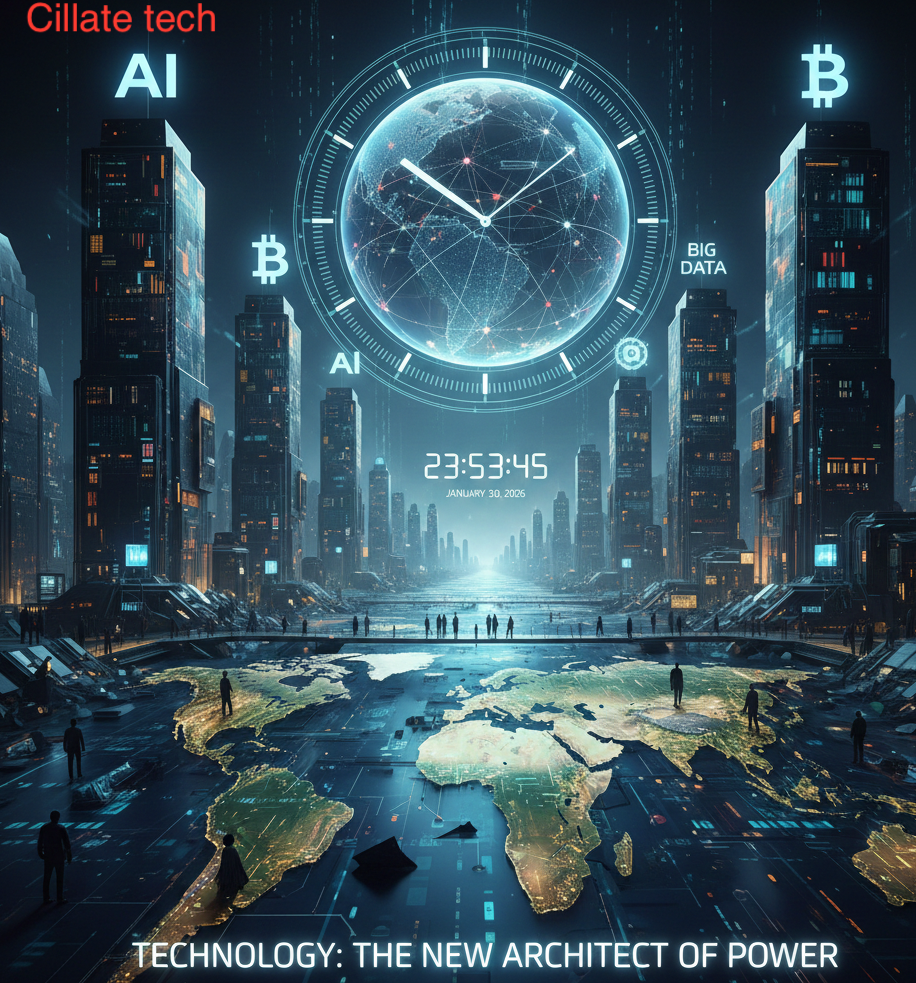
Human history has always been shaped by powerful forces such as empires, ideologies, wars, and revolutions. In the modern era, however, a new power has emerged quietly yet decisively: technology. It no longer serves merely as a tool in human hands; it has become an active force that influences decisions, shapes societies, and directs the course of history itself.
The Rise of Technology as a Historical Force
In earlier civilizations, power was held by those who controlled land, armies, and resources. Today, power increasingly belongs to those who control technology and information. The invention of writing preserved history, the printing press democratized knowledge, and the industrial revolution transformed economies. Each technological advancement has reshaped the world more permanently than many political events. Technology has now reached a point where it does not simply support historical change—it drives it.
From the Printing Press to Artificial Intelligence
The journey of technology through history reveals its growing influence. The printing press sparked the Renaissance and Reformation by spreading ideas beyond elite circles. Electricity redefined productivity and daily life. The internet erased geographical boundaries, connecting billions in real time. Today, artificial intelligence, machine learning, and automation are redefining intelligence and labor itself. These technologies do not just assist humans; they learn, predict, and decide, placing them at the center of modern historical transformation.
Technology and Power: From Kings to Algorithms
Traditional power once resided with monarchs, governments, and military leaders. In contrast, modern power often lies in algorithms, data, and digital platforms. Technology companies influence global markets, shape public opinion, and even affect political outcomes. Search engines determine what information is visible, while social media platforms influence beliefs and behavior. In many ways, technology now governs human choices more subtly than laws or armies ever did.
The Impact of Technology on Society and Culture
Technology has transformed how humans interact, communicate, and form identities. Social media has reshaped relationships, enabling global connections while also fostering isolation and polarization. Cultural trends spread instantly, blurring the lines between local and global cultures. Language, art, education, and entertainment have all evolved under technological influence. Culture is no longer shaped slowly over generations; it evolves at the pace of updates and innovations.
Social Media and Its Influence on Human Behavior
Social media platforms have become digital public squares. They amplify voices, mobilize movements, and expose injustices. At the same time, they can spread misinformation, fuel division, and manipulate emotions. A single post can change public opinion overnight.In this way, social media does not merely reflect history; it actively participates in creating it.
Technology’s Role in Shaping Global Economies
Economic power has shifted dramatically in the digital age. Wealth is no longer based solely on natural resources or industrial output but on innovation, software, and data. Automation has replaced traditional jobs while creating entirely new industries. Countries that invest in technology lead global markets, while those that fall behind face economic marginalization. Thus, technology now determines not only progress but also global inequality.
Automation, AI, and the Future of Work
Artificial intelligence and automation are redefining labor. Machines now perform tasks once exclusive to humans, from driving vehicles to diagnosing diseases. While these advancements increase efficiency, they also raise concerns about unemployment and skill gaps. History may remember this era as a turning point where humans had to redefine the meaning of work and purpose in a technologically driven world.
The Dark Side of Technological Power
Every powerful force carries risks. Technology has enabled mass surveillance, data exploitation, and cyber warfare. Privacy has become fragile, and ethical boundaries are often unclear. Unequal access to technology deepens social and economic divides, creating a digital gap between those who can participate in progress and those who cannot. History warns us that unchecked power—whether technological or otherwise—can lead to unintended consequences.
Ethical Challenges of Technological Advancement
As technology grows more powerful, ethical responsibility becomes crucial. Questions about artificial intelligence, data ownership, and digital rights demand urgent attention. Without thoughtful regulation and moral guidance, technology may shape history in harmful ways. The challenge of our time is not to stop technological progress, but to guide it wisely.
Future technologies and the Next Chapter of Human History
Emerging technologies such as quantum computing, biotechnology, and space exploration promise to redefine humanity’s future. These innovations may alter human lifespan, intelligence, and even our place in the universe. Future historians may look back at this era as the moment when technology became the most influential actor in human history.
Technology as a Modern Historical Actor
Technology is no longer a background force; it is a central character in the human story. It shapes power, culture, economy, and identity with unprecedented speed and reach. As humanity moves forward, the question is no longer whether technology will influence history, but how responsibly we will allow it to do so. Ultimately, technology reflects human values, and the history it creates will mirror the choices we make today.