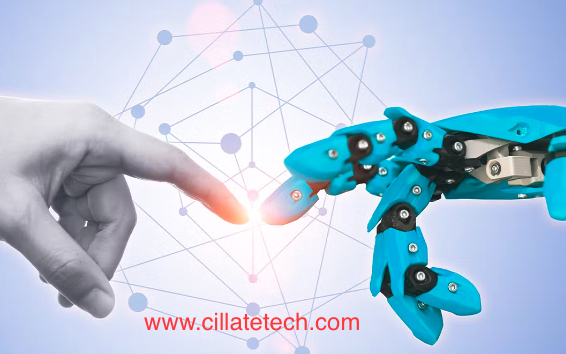
Technologies are evolving at a pace never seen before. What once seemed futuristic is now part of everyday life, and what seems experimental today will soon become mainstream. Next-generation technology refers to new technologies that are changing industries, redefining the way we live and work, and pushing the boundaries of what’s possible.
From artificial intelligence to quantum computing, next-generation technologies represent more than just upgrades, they represent fundamental changes in capacity, efficiency, and impact.
The rise of intelligent systems
The next generation of technologies is based on artificial intelligence (AI). Artificial intelligence systems are no longer limited to simple automation or data analysis. Modern AI can understand language, recognize images, generate content, predict outcomes, and even support decision-making.
Machine learning models power everything from recommendation systems and virtual assistants to fraud detection and medical diagnostics. As AI advances, it will move from a supportive role to a collaborative role, working alongside humans rather than simply replacing tasks.
This change is transforming sectors such as healthcare, finance, education, and manufacturing, making systems smarter, faster, and more adaptive.
The era of automation and robotics
Next-generation technologies are also accelerating the growth of automation and robotics. Robots are no longer limited to factories. Nowadays, they are used in warehouses, hospitals, agriculture, and even homes.
Advanced sensors, computer vision, and artificial intelligence allow robots to operate in dynamic environments, learn from experience, and perform complex tasks with precision. Automation helps companies increase productivity, reduce errors, and scale operations while changing the nature of work and the skills needed.
The emphasis shifts from monotonous tasks to creative problem solving and human-machine collaboration.
Communication across boundaries
With the introduction of 5G and future network technologies, communications will become faster, more reliable, and more widespread. Next-generation networks enable real-time communications, ultra-low latency, and rich device connectivity. This level of connectivity is essential for technologies such as self-driving cars, smart cities, remote surgery, and immersive virtual experiences. This will also drive the development of the Internet of Things (IoT), where everyday devices collect and exchange data to improve efficiency and convenience. In the next phase, connectivity will go beyond simply linking devices: it will seamlessly connect people, systems and environments.
Immersive digital experience
Technologies such as virtual reality (VR), augmented reality (AR), and mixed reality (MR) are changing the way we interact with digital content. These immersive tools extend beyond gaming and entertainment to education, training, healthcare, and design.
Imagine learning complex skills through realistic simulations, 3D data visualization, or collaborating with remote teams in a shared virtual space. As hardware becomes lighter and software becomes more powerful, immersive technologies blur the lines between the physical and digital worlds.
The power of data and cloud computing
Next-generation technologies will evolve based on data, and cloud computing is the backbone that makes it all possible. Today’s cloud platforms provide scalable computing power, storage, and advanced tools to help businesses and developers innovate faster than ever before.
Combined with edge computing, data can be processed closer to where it is generated, reducing latency and improving performance. This is essential for applications such as real-time analytics, autonomous systems, and intelligent infrastructure.
Data-driven decision-making is no longer an option, but a competitive necessity.
Security and trust in a digital world
As technology advances, so do the problems. Cyber threats are becoming increasingly sophisticated, making cybersecurity a critical part of next-generation technology. Modern security solutions use artificial intelligence and behavioral analysis to detect threats in real-time and respond proactively.
At the same time, technologies such as blockchain are opening new avenues for ensuring data transparency, authenticity, and integrity. These tools are particularly useful in the areas of finance, supply chain, identity management, and distributed systems.
Building safe, ethical, and reliable technology is just as important as building strong technology.
What will the future hold?
Next-generation technology is not about a single innovation, but about fusion. AI, connectivity, automation, immersive experiences, and secure infrastructure work together to create a smarter ecosystem. As these technologies develop, they will enable:
- Making cities and economies smarter
- Give people better tools and access
- Give people better tools and access
- Improving healthcare and sustainability
- Redefine the way you work and learn
The future of technology is not far away, and it is taking shape in the present tense. Those who understand and adapt to next-generation technologies will be well-positioned to lead, innovate, and succeed in a rapidly evolving digital world.