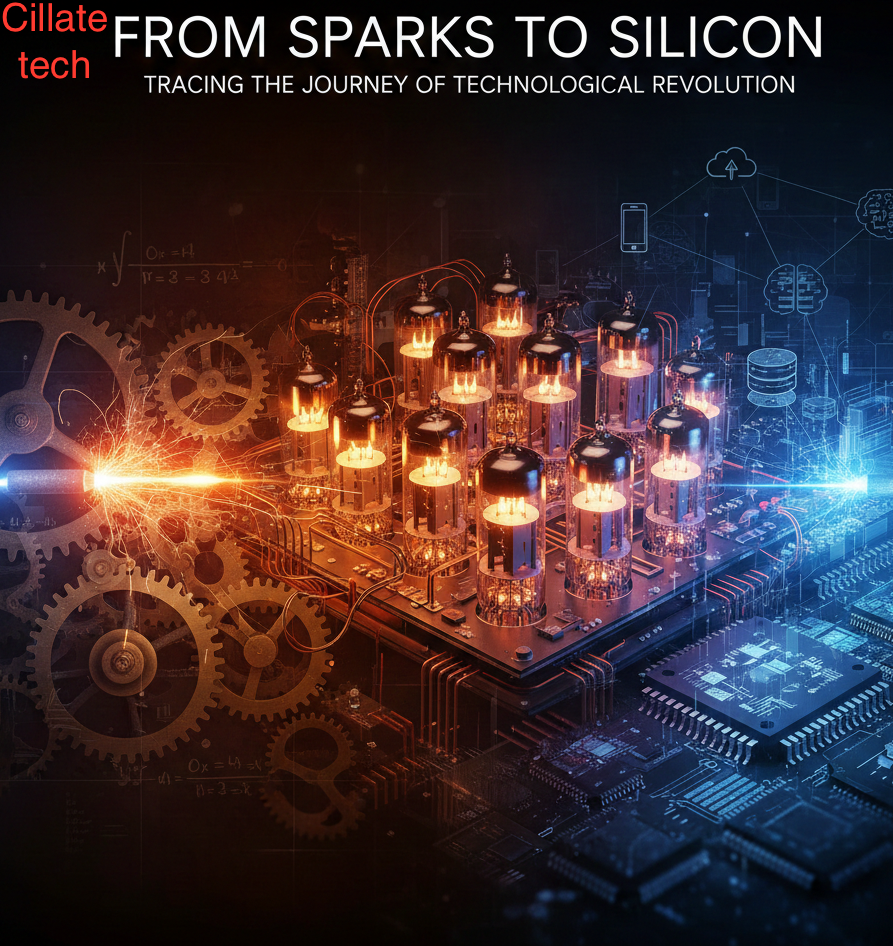
Technology has always been a driving force behind human progress. From the earliest tools used by our ancestors to the sophisticated devices we carry today, technological innovation has reshaped societies, economies, and daily life. The journey from sparks of discovery to the age of silicon and digital intelligence is a fascinating story of curiosity, experimentation, and relentless human ingenuity. This blog explores the path of technological development, highlighting the key milestones that have led to the modern technological revolution.
The Dawn of Innovation: Early Human Ingenuity
The roots of technology trace back tens of thousands of years when early humans began creating simple tools to improve survival. Stone tools, fire, and basic agricultural implements marked the first sparks of innovation. These early inventions, though primitive by today’s standards, laid the groundwork for problem-solving and experimentation—a mindset that continues to drive technology forward.
The agricultural revolution, in particular, was a turning point. By developing irrigation systems, plows, and domesticated crops, humans were able to produce surplus food, which led to settled communities, trade, and the eventual rise of civilizations. This period demonstrated that technology is not just about tools but about enhancing efficiency, improving quality of life, and enabling social development.
Industrial Revolution: Mechanization and Mass Production
The next significant leap in technological progress came during the Industrial Revolution in the 18th and 19th centuries. Steam engines, mechanized looms, and railways transformed economies and lifestyles. Factories enabled mass production, shifting the world from artisanal craftsmanship to large-scale manufacturing.
Electricity and the telegraph further accelerated innovation, connecting distant regions and enabling real-time communication. This era showed how technology could multiply human productivity, bridge distances, and create entirely new industries. The Industrial Revolution also highlighted a crucial pattern in technological growth: innovations build upon each other, creating compounding effects over time.
The Age of Electronics and Digital Foundations
The 20th century introduced electronics, marking the beginning of the digital era. The invention of vacuum tubes, transistors, and integrated circuits laid the foundation for modern computing. These breakthroughs transformed information processing, making it faster, smaller, and more reliable.
Computers, initially enormous and limited to specialized applications, gradually became accessible to businesses and households. The development of programming languages, operating systems, and microprocessors further accelerated technological progress. By the late 20th century, the world was entering an age where information became a critical resource, and digital technology started to redefine communication, education, and commerce.
Silicon Revolution: The Rise of Microchips
Silicon microchips revolutionized the way we live, work, and interact. Microprocessors allowed computers to become personal, mobile, and interconnected. Smartphones, tablets, and laptops put incredible computing power in the palm of our hands.
The rise of the internet and wireless connectivity transformed technology into a global phenomenon. Online communication, e-commerce, and social media platforms reshaped human interaction, creating opportunities for education, business, and entertainment that were unimaginable a few decades ago. The term “technological revolution” became tangible as innovation began to touch every aspect of daily life.
Artificial Intelligence and the Future of Technology
Today, technology is entering a new frontier: artificial intelligence, machine learning, and automation. AI is already embedded in our devices, optimizing processes, personalizing experiences, and even making decisions that once required human judgment. From smart assistants to autonomous vehicles, AI promises to redefine industries and redefine the limits of human capability.
Moreover, emerging technologies like quantum computing, biotechnology, and advanced robotics suggest that the pace of change will continue accelerating. The journey from simple tools to AI-driven systems demonstrates a consistent pattern: each breakthrough builds on previous knowledge, creating exponential growth in what humans can achieve.
Lessons from the Journey of Technological Revolution
The history of technological development teaches us several key lessons. Innovation thrives in environments where curiosity, experimentation, and collaboration are encouraged. Each era shows that technology is not just about devices or tools—it is a reflection of human creativity, problem-solving, and the desire to improve lives.
Furthermore, the journey emphasizes responsibility. While technological advancements offer unprecedented opportunities, they also present challenges in ethics, security, and environmental sustainability. As we continue advancing, understanding and managing these impacts will be as crucial as creating the innovations themselves.
From Sparks to Silicon and Beyond
The journey of technological revolution, from the first sparks of human ingenuity to the silicon-driven digital era, illustrates humanity’s extraordinary ability to innovate and adapt. Technology has transformed the way we live, work, and interact, and the future promises even greater possibilities with AI, quantum computing, and other emerging innovations.
By tracing this path, we gain a deeper appreciation for the tools, systems, and ideas that shape our lives and realize that technological evolution is a continuous process—one that will keep transforming our world in ways we can only begin to imagine.