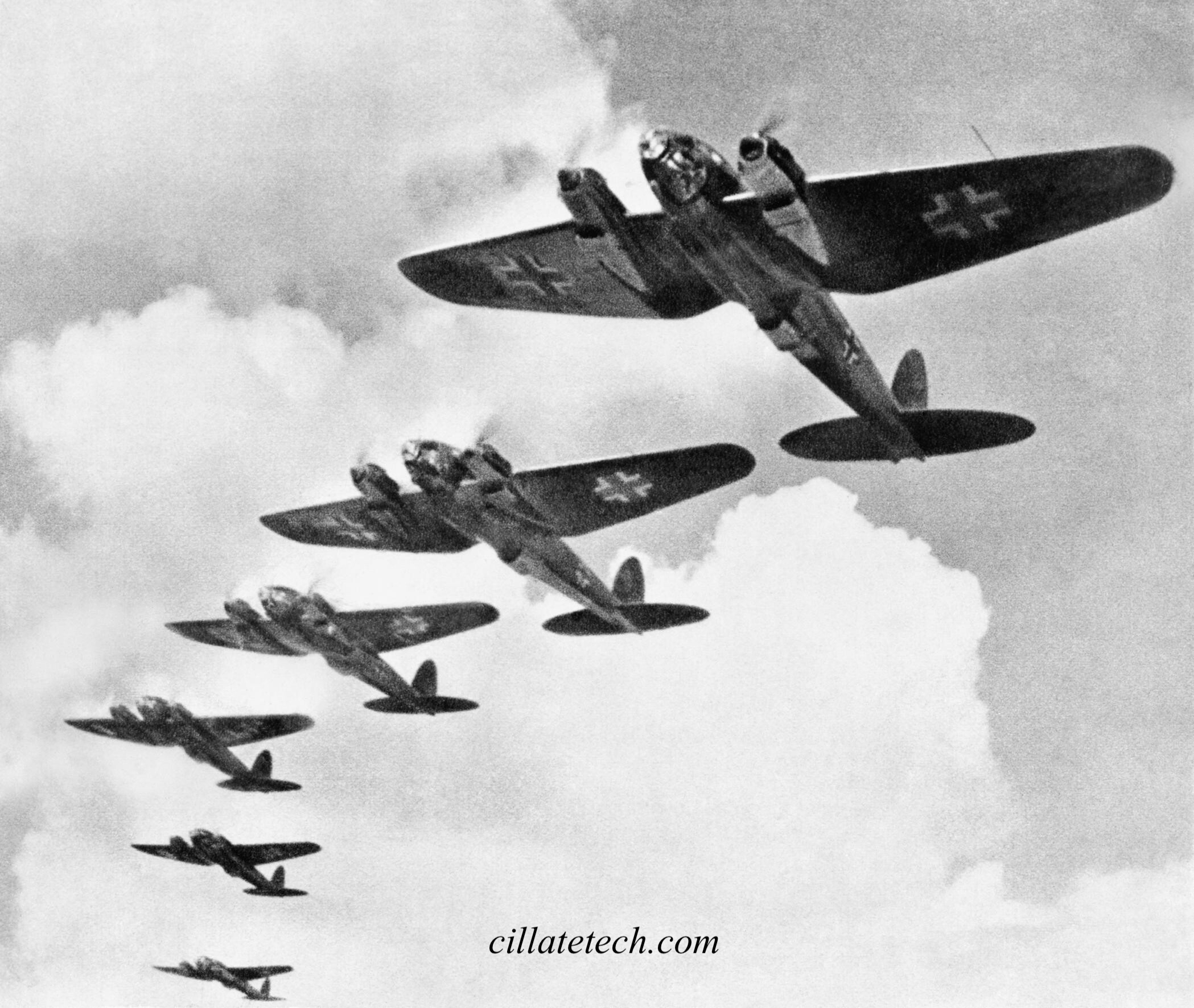
In the early 21st century, the face of warfare is undergoing a transformation as dramatic as the advent of gunpowder or the mechanized blitzkrieg. Today’s battlefields are defined not by the size of armies alone, but by the sophistication of unmanned systems, artificial intelligence (AI), and the vast streams of data that underpin them. From the skies above Ukraine to contested regions around the globe, drones and digital technologies have shifted the balance of power, dictating not just how wars are fought — but who wins and who loses.
War Redefined: The Drone Revolution
What was once niche technology is now central to military strategy. Today’s military drones — formally known as Unmanned Aerial Vehicles (UAVs) — are no longer just reconnaissance tools; they are decisive instruments of combat. In conflicts from Ukraine to the Middle East and South Asia, drones have evolved into lethal platforms capable of precision strikes, surveillance, and automated operations.
According to data from the Global Peace Index 2025, the number of manufacturers producing drones grew from just six in 2022 to over 200 by 2024, reflecting explosive global demand and rapid technological diffusion. In Ukraine alone, more than 2.5 million drones were expected to be produced in 2025, ranging from improvised quadcopters to advanced, semi-autonomous combat systems. This proliferation has not only democratized access to aerial capabilities but also reshaped battlefield tactics fundamentally.
In the Russia‑Ukraine war — often termed the first large‑scale drone war — drones are responsible for 70–80% of battlefield casualties, according to military analyses. Modern drone deployments have shifted casualties away from traditional troop formations to agile, technology‑driven engagements where invisibility, speed, and data dominate.
Data as a Weapon: AI and Battlefield Intelligence
Drones are only as effective as the data they collect and process. The rise of AI and advanced analytics has turned raw battlefield information into actionable intelligence, enabling forces to identify targets, anticipate enemy movements, and make split‑second decisions.
Notably, Ukraine recently opened access to its battlefield data to allied nations and companies to train AI models for drone operations, sharing millions of annotated images and combat footage. This initiative aims to accelerate the development of autonomous systems that can interpret battlefield patterns without constant human control.
AI’s impact on sensitivity and precision is evident in multiple theaters. For example, Polish and Lithuanian FPV (First Person View) drones equipped with AI systems can pierce through electronic warfare environments — including GPS jamming — enabling autonomous navigation and target recognition where traditional systems fail.
Beyond navigation, modern AI enhances targeting accuracy. Ukrainian forces integrated an AI targeting module called TFL‑1 into FPV drones, significantly improving strike precision even amid radio interference and rugged terrain. These systems don’t replace human oversight but enhance operator effectiveness dramatically.
Affordable Destruction: The Economics of Drone Warfare
One of the defining strengths of drone technology is its cost‑effectiveness. Traditional aircraft, tanks, and artillery systems require immense investment — often millions of dollars per unit. By contrast, modern combat drones vary widely in cost, from relatively inexpensive quadcopters that can be assembled for a few hundred dollars to sophisticated UAVs worth tens of thousands. This economic asymmetry allows smaller forces to challenge larger militaries effectively.
Recent global figures highlight the rapid escalation of drone strikes:
- Recorded drone strikes worldwide rose from 421 in 2018 to 4,957 in 2023.
- Drone‑related fatalities increased by more than 168% over the same period.
- In the Russia‑Ukraine war, Ukraine reportedly loses about 10,000 drones per month due to combat attrition and electronic warfare.
These numbers underscore how drone warfare is not just a tactical tool, but a strategic shift — cheaper to build, easier to deploy, and capable of mass production in ways that traditional weapon systems are not.
Autonomy and the Ethics of AI‑Driven Combat
With growing reliance on AI comes ethical complexity. Autonomous weapons systems, capable of identifying and engaging targets with minimal human intervention, raise questions about accountability, legality, and human judgment in life‑or‑death decisions.
The debate is intensifying at the highest levels. Some defense firms and governments argue that AI integration is essential for rapid response and survivability — especially when human reaction times lag behind automated systems. Others, including tech companies like Anthropic, have taken public stances against broad deployment of their AI for fully autonomous lethal weapons, citing ethical concerns and urging restraint in how their models are used.
Indeed, military experts argue that we may be witnessing a modern “Oppenheimer moment,” where AI‑enabled autonomous weapons are as transformative — and potentially as unsettling — as the atomic bomb once was. Without robust regulatory frameworks, increasing autonomy could lead to unintended escalations and reduced human control over critical decisions.
Changing Battlefield Dynamics: Swarms, Stealth, and Beyond
Modern drone deployments are not just singular units; they are often swarms — coordinated networks of UAVs that operate cooperatively. Countries like China are experimenting with AI that allows a single operator to control over 200 drones simultaneously, a leap toward networked swarm operations that could overwhelm traditional defenses.
This “swarm warfare” concept transforms drones from isolated units into collective systems — akin to a digital hive — capable of dynamic re‑tasking mid‑flight, distributed sensing, and synchronized strikes. The strategic implications are profound: a well‑coordinated swarm can impose cascading effects on enemy defenses, logistic hubs, and command structures faster than ever before.
Stealth and advanced autonomy are also converging. Turkey’s Bayraktar Kızıl Elma, one of the first AI‑enabled unmanned fighters with autonomous flight and mission systems, marks a pivotal innovation — one that could redefine aerial combat by blending traditional air power with unmanned capabilities.
Adaptation and Countermeasures: Battlefield Evolution
As offensive technologies evolve, so do defensive tactics. NATO forces, for instance, are training artillery units to counter drone surveillance and strikes by mastering concealment, thermal masking, and electromagnetic signature reduction — techniques once considered archaic but now vital against persistent aerial observation.
Electronic warfare systems, anti‑drone barriers, and integrated air defense networks are all developing responses to drone threats. Meanwhile, military units leverage data fusion platforms that combine satellite imagery, UAV feeds, and signal intelligence into unified battlefield awareness, significantly reducing target identification time.
Global Impact: From Frontlines to Infrastructure
The implications of drone and data‑driven warfare extend beyond frontlines. In a stark evolution, drones have been used to strike critical civilian infrastructure like data centers, demonstrating how vulnerability spreads into the digital and economic realms of national security. Attacks on cloud computing facilities can disrupt financial systems, communications, and government operations — expanding the definition of warfare to encompass cyber‑physical targets.
Meanwhile, nations around the world are racing to integrate these technologies. Market analysis shows the global military AI sector — including UAV technologies — is projected to reach $21.8 billion by 2030, with roughly 70% of nations with advanced militaries investing heavily in AI‑enabled drone systems.
Human and Machine: A New Combat Paradigm
Despite the rise of autonomous systems, human oversight remains crucial. Current doctrine emphasizes a human‑AI partnership where officers interpret data, supervise automated tasks, and make final judgments on lethal engagements. This model acknowledges both the strengths and limits of machine cognition — speed and pattern recognition — and human discernment, ethics, and context awareness.
Research in human‑machine teaming also explores next‑generation interfaces, including brain‑computer integration for battlefield command, hinting at future combat where soldiers may issue strategic directives directly to swarm networks via neural links — further blurring the lines between developers, operators, and machines.
Looking Ahead: The Future of War
The technologies that once seemed futuristic are now here — not in prototypes, but on active battlefields. The rise of drones, AI, and data fusion means that tomorrow’s wars will be fought with algorithms as much as artillery, with digital infrastructure as much as physical terrain.
The challenge for nations, societies, and global regulators is to harness these capabilities responsibly. Without careful oversight, autonomous weapon systems could accelerate conflicts, erode accountability, and elevate civilian risks. Yet if balanced with ethical frameworks, technological innovation can also save lives, protect non‑combatants, and provide strategic clarity in chaotic conflict zones.
In the era of Drones, Data, and Destruction, the very nature of war is being rewritten — not just in terms of military capability, but in the moral, political, and technological choices societies make about power, violence, and human security.