A New Era of Urban Transportation
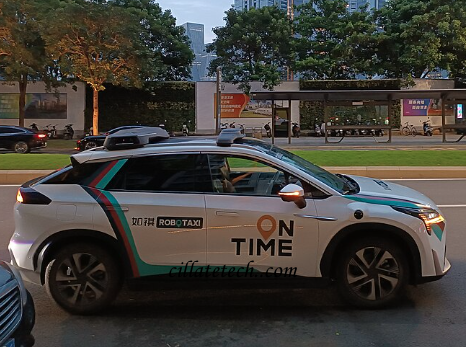
For decades, taxis have been an essential part of urban life. Whether rushing to the airport, commuting to work, or returning home late at night, millions of people rely on taxi services every day. Traditionally, these vehicles have always had one essential component: a human driver behind the wheel. However, technological innovation is beginning to reshape this familiar system. Autonomous vehicles—commonly known as self-driving cars—are gradually moving from experimental prototypes to real-world transportation solutions. Among the most transformative developments within this field is the rise of robotaxis, fully autonomous vehicles designed specifically for ride-hailing services. Robotaxis promise a future where passengers can travel safely and efficiently without a human driver. These vehicles rely on advanced sensors, artificial intelligence, and real-time data analysis to navigate roads and traffic conditions. Companies such as Tesla, Waymo, and Uber are investing heavily in this technology, aiming to revolutionize urban transportation. Yet while robotaxis offer exciting possibilities, they also raise an important question: if cars can drive themselves, what will happen to millions of professional taxi drivers around the world? The rise of autonomous taxis represents not only a technological advancement but also a social and economic transformation that could reshape cities, jobs, and transportation systems.
Understanding Robotaxis: How Do They Work?
Robotaxis are autonomous vehicles that operate without a human driver. Unlike conventional taxis, they use complex technological systems to navigate roads and transport passengers safely. At the core of robotaxi technology is artificial intelligence. The vehicle’s onboard computer constantly processes data from multiple sensors, including cameras, radar, and LiDAR systems. These sensors create a detailed map of the surrounding environment, detecting pedestrians, other vehicles, traffic signals, and obstacles. Machine learning algorithms then analyze this data to make driving decisions in real time. The system determines when to accelerate, brake, change lanes, or stop at intersections. Over time, the AI learns from millions of driving scenarios, gradually improving its ability to handle complex traffic situations. Passengers typically summon robotaxis through mobile applications similar to current ride-hailing platforms. Once a ride is requested, the autonomous vehicle arrives at the pickup location, and passengers simply enter their destination. Without a driver, the entire process becomes automated—from navigation to payment—creating a seamless transportation experience.
The Companies Leading the Robotaxi Revolution
The development of robotaxis is being driven by several technology and automotive companies competing to dominate the future mobility market. One of the most prominent players is Waymo, a subsidiary of Alphabet Inc.. Waymo has already launched limited robotaxi services in several cities, where passengers can ride in fully autonomous vehicles without human drivers. Meanwhile, Tesla continues to develop its autonomous driving software, with plans to introduce a large-scale robotaxi network in the future. The company believes that self-driving vehicles will dramatically reduce transportation costs and increase efficiency. Ride-hailing giant Uber has also invested heavily in autonomous vehicle technology, recognizing that driverless taxis could significantly reduce operating expenses. Traditional automakers are joining the race as well. Companies such as General Motors and Toyota are developing their own autonomous transportation platforms. The intense competition among these companies demonstrates how valuable the robotaxi market could become in the coming decades.
Why Robotaxis Are Gaining Popularity
Several factors explain why robotaxis are attracting increasing attention from both companies and governments. One major advantage is cost efficiency. Human drivers represent the largest operating expense for taxi and ride-hailing services. By eliminating this cost, robotaxi systems could potentially offer significantly cheaper rides. Safety is another important factor. Human error is responsible for the majority of road accidents worldwide. Autonomous vehicles, in theory, could reduce accidents by removing distractions, fatigue, and reckless driving behaviors. Robotaxis may also improve transportation accessibility. People who cannot drive—such as elderly individuals or people with disabilities—could benefit from reliable autonomous transportation. Furthermore, autonomous taxi fleets could reduce the need for private car ownership in cities. Instead of owning a vehicle that remains parked most of the time, people may rely on on-demand robotaxis for transportation. This shift could help reduce traffic congestion and free up valuable urban space currently used for parking.
The Potential Impact on Taxi Drivers
Despite the advantages of robotaxis, their rise raises serious concerns about employment. Millions of people worldwide depend on driving jobs for their livelihoods, including taxi drivers, ride-hailing drivers, and delivery drivers. If autonomous vehicles become widespread, many of these jobs could gradually disappear. This potential disruption has sparked debates about the future of work in an increasingly automated world. Historically, technological progress has always changed labor markets. For example, the introduction of industrial machinery reduced the need for manual labor in factories but also created new industries and job opportunities. Similarly, the rise of robotaxis may eliminate certain driving jobs while generating new roles in technology, maintenance, software engineering, and fleet management. However, the transition could still be challenging for workers who depend on driving as their primary source of income.
Safety Challenges and Public Trust
While autonomous technology has advanced rapidly, robotaxis still face significant challenges before achieving widespread adoption. One major concern involves safety and reliability. Driving is an extremely complex task that requires constant decision-making in unpredictable environments. Human drivers rely on intuition, experience, and quick judgment in difficult situations. Autonomous systems must replicate this decision-making ability using algorithms and sensor data. Although AI can process information quickly, unusual or unexpected scenarios may still pose difficulties. Public trust is another critical factor. Many people remain skeptical about riding in a vehicle without a human driver. High-profile accidents involving autonomous vehicles have intensified these concerns. To gain widespread acceptance, robotaxi systems must demonstrate consistent safety performance and transparency in how their technology operates.
The Role of Governments and Regulations
Government regulations will play a crucial role in determining how quickly robotaxis become common on public roads. Transportation authorities must establish clear safety standards, testing requirements, and legal frameworks for autonomous vehicles. Questions about liability—such as who is responsible for accidents involving robotaxis—must also be addressed. Some cities have already begun experimenting with autonomous taxi services through pilot programs. These controlled environments allow companies to test their technology while regulators evaluate safety and performance. As governments gain more experience with autonomous transportation, regulations will likely evolve to support broader adoption.
How Robotaxis Could Transform Cities
Beyond individual transportation, robotaxis could significantly reshape urban environments. If autonomous ride-sharing becomes widely available, fewer people may feel the need to own personal vehicles. This shift could reduce the number of cars on city streets and decrease parking demand. Urban planners could repurpose parking spaces into parks, housing, or public infrastructure. Streets could also become safer and more efficient if autonomous vehicles communicate with each other to coordinate traffic flow. Additionally, robotaxi fleets could operate continuously throughout the day, maximizing vehicle usage and reducing idle time. These changes could lead to more sustainable and efficient urban transportation systems.
Will Robotaxis Fully Replace Human Drivers?
Despite rapid technological progress, it is unlikely that robotaxis will immediately replace human taxi drivers everywhere. Autonomous systems perform best in structured environments with clear road conditions and predictable traffic patterns. In many regions, particularly developing countries with complex road systems, human drivers may remain essential for a long time. Moreover, some passengers may still prefer the presence of a human driver for reasons of comfort, assistance, or social interaction. Instead of complete replacement, the future of transportation may involve a hybrid system where human drivers and robotaxis coexist. Autonomous vehicles might dominate certain routes or urban areas, while human drivers continue operating in more challenging environments.
A Transportation Revolution in Progress
The emergence of robotaxis represents one of the most significant developments in modern transportation. Powered by artificial intelligence, advanced sensors, and machine learning, these vehicles have the potential to transform how people move through cities. Companies such as Tesla, Waymo, and Uber are leading the race to develop autonomous ride-hailing services that could make transportation cheaper, safer, and more efficient. However, the rise of robotaxis also raises important questions about employment, safety, and regulation. Millions of professional drivers could face significant changes in their careers as automation reshapes the transportation industry.
Ultimately, the future of taxis may not be defined by a simple replacement of humans with machines. Instead, it will likely involve a gradual transition in which technology and human workers adapt to new roles within an evolving transportation ecosystem. Robotaxis are indeed coming—but whether they will completely replace human drivers remains an open question. What is certain, however, is that the way people travel in cities will look very different in the decades ahead.