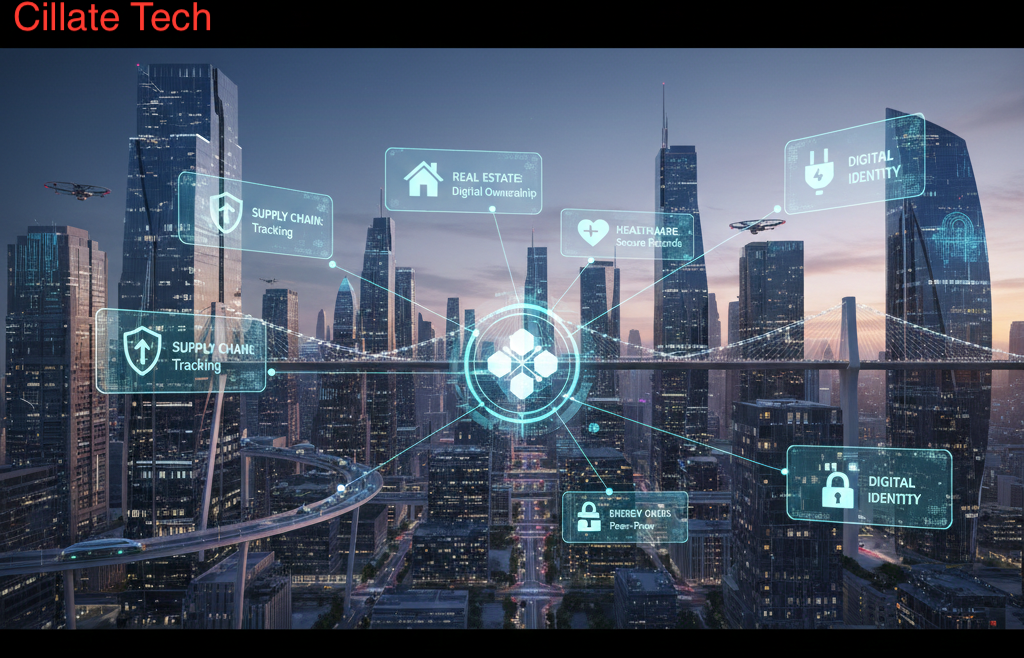
Blockchain technology is often associated with cryptocurrencies like Bitcoin and Ethereum, but its potential extends far beyond digital currencies. As we move through 2026, blockchain is increasingly being adopted across various industries, offering transparency, security, and efficiency in ways that were once unimaginable. From supply chain management to healthcare, blockchain is revolutionizing business processes and reshaping how organizations operate. This blog explores the real-world applications of blockchain beyond cryptocurrency and highlights how it is influencing the global economy today.
Supply Chain Transparency and Efficiency
One of the most impactful applications of blockchain is in supply chain management. By providing an immutable ledger of transactions, blockchain allows companies to track the origin, movement, and handling of goods in real time.
For example, retailers can verify the authenticity of products, monitor shipping conditions, and reduce counterfeit items. Consumers also benefit from increased transparency, as blockchain enables them to trace the journey of products from manufacturer to shelf. This level of accountability reduces fraud, enhances trust, and improves overall operational efficiency.
Healthcare Data Management
Blockchain is transforming the healthcare sector by securing patient records and improving data sharing. Patient information stored on a blockchain is encrypted and immutable, reducing the risk of data breaches and unauthorized access.
Healthcare providers can safely share critical data across hospitals, clinics, and insurance companies while maintaining patient privacy. Blockchain also ensures that medical records, prescriptions, and test results remain accurate and tamper-proof. This creates a more efficient healthcare ecosystem, minimizing errors and enabling better patient care.
Smart Contracts in Legal and Business Transactions
Smart contracts are self-executing agreements encoded on a blockchain, eliminating the need for intermediaries. These contracts automatically enforce terms and conditions when predefined conditions are met, making transactions faster, cheaper, and more reliable.
Businesses in real estate, finance, and logistics are increasingly adopting smart contracts to streamline operations. For instance, property transactions can be executed instantly with blockchain verification, while payment processes in international trade can occur without delays or excessive fees.
Digital Identity and Authentication
Blockchain is reshaping digital identity management by providing secure, verifiable credentials. Users can have a single digital identity that is protected against fraud and identity theft.
Governments, educational institutions, and financial services are exploring blockchain-based ID systems for passport verification, academic certificates, and banking access. This approach reduces paperwork, prevents forgery, and enhances trust in digital interactions.
Decentralized Finance (DeFi) and Beyond
While blockchain’s association with cryptocurrency remains strong, Decentralized Finance (DeFi) exemplifies its broader potential. DeFi platforms allow users to lend, borrow, and trade assets without relying on traditional financial institutions.
This system promotes financial inclusion, particularly in regions with limited access to banking services. Beyond DeFi, blockchain also supports tokenization of assets, such as real estate and artwork, enabling fractional ownership and creating new investment opportunities.
Government and Public Services
Blockchain is increasingly being adopted by governments to enhance transparency and reduce corruption. Voting systems, tax records, and land registries are being digitized on blockchain platforms, ensuring accountability and accuracy.
For example, blockchain-based voting can eliminate tampering and enable real-time verification of election results. Land registries maintained on blockchain prevent disputes over property ownership, while public service records become more accessible and reliable.
The Future of Blockchain Beyond Cryptocurrency
Blockchain is no longer confined to the world of cryptocurrencies. Its applications in supply chain management, healthcare, smart contracts, digital identity, DeFi, and public governance demonstrate its transformative potential. As we move through 2026, organizations and governments are increasingly leveraging blockchain to create secure, transparent, and efficient systems.
By understanding and adopting these innovations, businesses and individuals can harness blockchain’s power to not only enhance operational efficiency but also build trust in an increasingly digital world. The technology’s future is vast, and its influence will continue to expand far beyond digital currency.