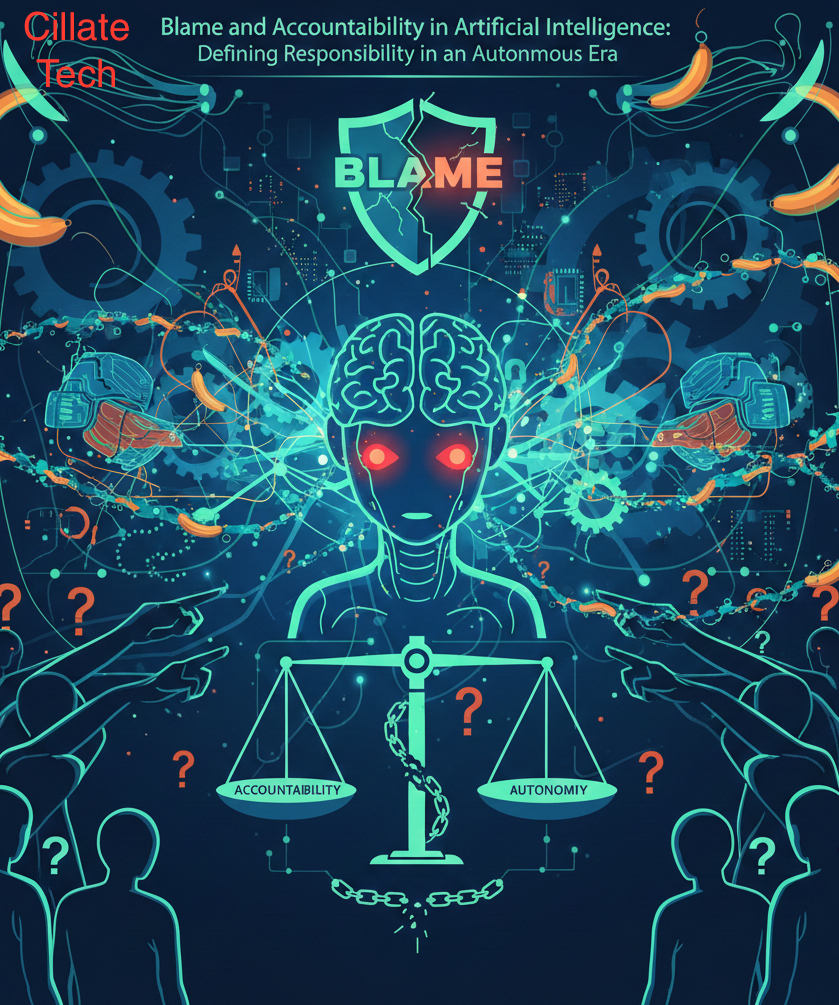
The Growing Importance of AI Accountability
Artificial Intelligence (AI) is transforming industries across the globe, from healthcare and finance to logistics and manufacturing. With its ability to process vast amounts of data and make decisions autonomously, AI is rapidly becoming integral to decision-making processes that have direct consequences for individuals and organizations alike. As these technologies become more sophisticated, however, they also raise a critical question: who is responsible when AI systems fail or cause harm?
The absence of clear frameworks for AI accountability is emerging as one of the most pressing concerns in technology governance. In this article, we explore the complexities surrounding the allocation of responsibility in AI systems, the key stakeholders involved, and why establishing clear accountability structures is essential for fostering trust, safety, and ethical development in AI technologies.
The Complexity of Accountability in AI Systems
AI differs fundamentally from traditional software, as it is not merely programmed to follow a set of predefined instructions. Instead, AI systems, particularly those driven by machine learning and deep learning algorithms, evolve based on the data they process, adapting their behavior over time. This dynamic nature presents significant challenges in tracking the exact causes of errors or biases when they arise.
When an AI system causes an unintended consequence, pinpointing responsibility can become exceedingly difficult. The issue is further complicated by the involvement of various stakeholders at different stages of an AI system’s lifecycle, from data collection and algorithm design to deployment and real-time monitoring.
Key Stakeholders in AI Accountability
1. AI Developers and Engineers
The professionals who design and develop AI systems are often the first to be considered when discussing accountability. These individuals are responsible for ensuring that the algorithms they create are free from bias, errors, and ethical pitfalls. However, AI systems are typically developed with the intention of being applied in a variety of contexts, meaning that developers may have limited control over how their creations are ultimately used. This raises the question of to what extent they should be held accountable for the outcomes.
2. Organizations and Corporations
Businesses that deploy AI systems in their operations bear significant responsibility for how these technologies are implemented and managed. Whether it’s automated decision-making tools in hiring processes, predictive analytics for consumer behavior, or autonomous systems in transportation, organizations must ensure that AI technologies are used ethically and are subject to rigorous oversight. Failing to provide such oversight may result in harmful consequences, leaving the organization liable for any adverse effects.
3. Data Providers
AI systems rely heavily on the quality and diversity of the data they are trained on. Biases in data—whether they arise from historical prejudices, incomplete datasets, or misrepresentative samples—can manifest as harmful outcomes in AI systems. Therefore, entities responsible for providing or curating data must ensure that it is accurate, comprehensive, and representative. Accountability extends to ensuring that the data used to train AI models does not inadvertently perpetuate existing biases or injustices.
4. Governments and Regulatory Bodies
Regulation is essential for ensuring the ethical development and deployment of AI. Governments and regulatory agencies play a critical role in defining legal standards and frameworks that govern AI technologies. However, current regulations in most countries remain underdeveloped, leaving a gap in accountability for the widespread application of AI systems. Inadequate oversight not only exposes individuals to harm but also diminishes public trust in AI technologies. Thus, robust regulatory frameworks are essential for establishing clear accountability and safeguarding public interests.
Challenges in Defining Responsibility in AI Failures
1. Opacity in AI Decision-Making
One of the defining features of many modern AI systems is their inherent opacity. Machine learning models, particularly deep neural networks, are often described as “black boxes” due to the difficulty in understanding the specific decision-making processes they employ. This lack of transparency presents a significant challenge in assigning accountability when AI systems produce erroneous or biased outcomes. In situations where the rationale behind an AI’s decision is unclear, it becomes difficult to determine where responsibility lies.
2. Distributed Responsibility
AI systems are rarely the product of a single entity or decision. Instead, their outcomes are shaped by contributions from multiple parties, including developers, data providers, end-users, and deploying organizations. This distributed responsibility makes it challenging to trace specific errors to a single cause, especially in complex systems that interact with external variables. In many cases, accountability is diffused across multiple levels, leaving affected individuals or organizations without a clear party to hold responsible.
3. The Rapid Pace of Technological Advancement
AI technologies are evolving at a pace that far outstrips the ability of regulatory bodies to keep up. As a result, many of the existing laws that govern technology and consumer protection were not designed with AI applications in mind. Inadequate legislation and evolving technologies create a regulatory lag, leaving AI systems operating in legal gray areas. This gap in regulation exacerbates the problem of accountability, as there is no clear framework for determining fault or imposing consequences.
The Real-World Impact of Accountability Gaps in AI
The absence of clear accountability frameworks has led to real-world failures in AI systems. For example, facial recognition technology has been shown to exhibit significant racial biases, resulting in wrongful arrests and human rights violations. Similarly, automated recruitment systems have been criticized for discriminating against women and minority groups based on biased training data. Autonomous vehicles have also raised concerns, with accidents involving AI-powered cars leading to debates about manufacturer and developer responsibility.
In these cases, the lack of a clear accountability structure means that those affected often struggle to seek redress or justice. This erosion of public trust in AI technologies is a critical issue, as it undermines the potential benefits of AI and hinders its widespread acceptance.
Ethical Considerations in AI Accountability
At its core, AI accountability is not just a legal issue, but an ethical one. While AI systems may make decisions, humans are ultimately responsible for their design, deployment, and ongoing management. Ethical AI requires that decision-makers acknowledge their role in shaping the outcomes of these systems and take proactive steps to mitigate potential harms.
The failure to assume responsibility for AI’s actions risks normalizing unethical practices, such as discriminatory decision-making, privacy violations, and lack of transparency. Thus, it is essential for all parties involved in the development and deployment of AI technologies to prioritize ethical standards at every stage.
Toward a Framework for AI Accountability
To address the complex challenges of AI accountability, the following measures are essential:
- Ensuring Transparency: AI systems must be designed with transparency in mind, allowing for auditable decision-making processes that can be easily explained and understood by users, regulators, and developers.
- Clear Accountability Structures: Legal and regulatory frameworks must clearly define responsibility at every stage of the AI lifecycle, from development and testing to deployment and real-time monitoring.
- Mandatory Risk Assessments: Companies should conduct thorough risk assessments for AI systems, particularly when they are deployed in high-stakes contexts such as healthcare, law enforcement, or transportation.
- Independent Oversight: Independent bodies or regulatory agencies should oversee AI development to ensure compliance with ethical standards and ensure accountability for AI failures.
- Global Cooperation: Given the cross-border nature of AI, international cooperation is necessary to establish global standards for AI accountability and ethics.
Why AI Accountability is Crucial for the Future
The importance of clear AI accountability cannot be overstated. Without adequate responsibility frameworks, AI systems may be deployed without sufficient safeguards, leading to potential harms, discrimination, and societal division. Conversely, well-defined accountability measures ensure that AI systems are used responsibly, ethically, and transparently, fostering public trust and promoting the sustainable growth of AI technologies.
As AI continues to shape the future of industries and societies, addressing the issue of AI accountability is essential for unlocking its full potential while safeguarding human rights and values.
The Path to Responsible AI Development
As AI technologies continue to advance, defining clear lines of responsibility is not just a matter of legal compliance—it is fundamental to ensuring that these systems are used in a way that benefits society as a whole. Establishing strong frameworks for AI accountability will help prevent harm, promote fairness, and build trust in these transformative technologies. By prioritizing ethical AI development, we can ensure that the AI systems of tomorrow serve to enhance human well-being and promote social good.