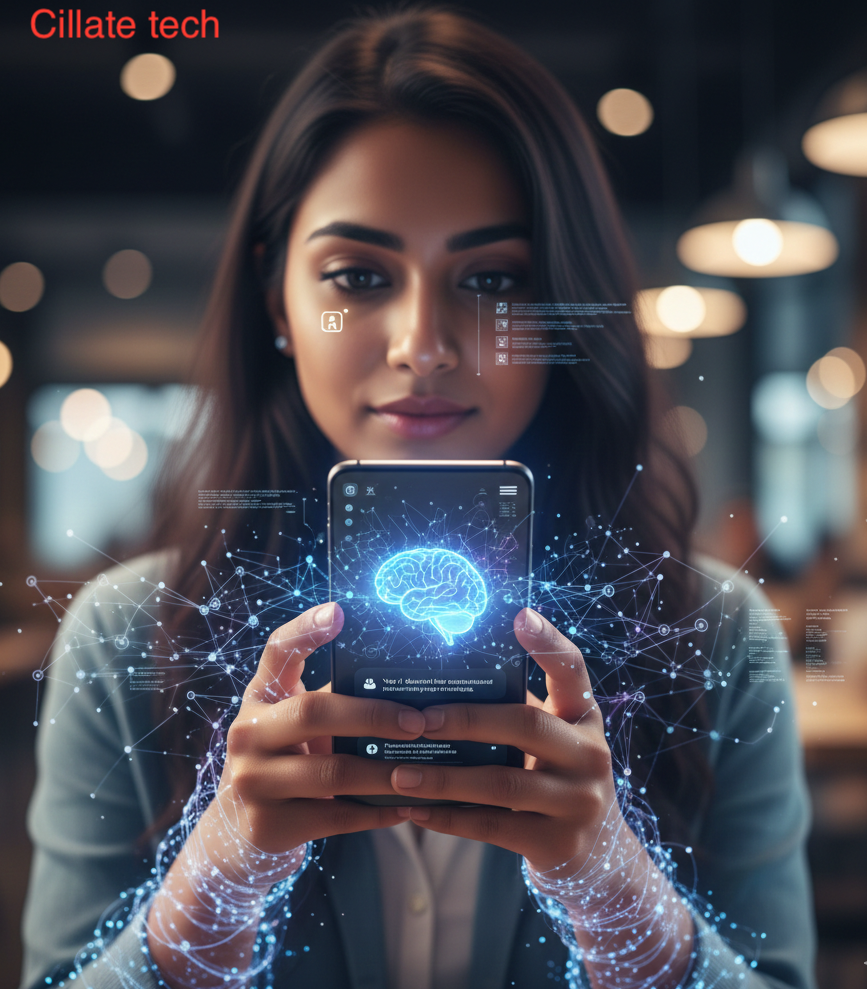
Artificial Intelligence (AI) has quietly become an essential part of modern smartphones. While most people associate AI with futuristic technology like robots or self-driving cars, it is already deeply integrated into everyday mobile experiences. From improving photos and battery management to customizing app content, AI works behind the scenes to make your smartphone smarter, faster, and more intuitive.
One of the most noticeable ways AI enhances smartphones is through biometric security. Face recognition and fingerprint sensors are powered by AI algorithms that adapt over time, recognizing changes in your appearance or refining fingerprint detection. This technology ensures faster, more secure access to your device without requiring any effort from you.
AI has also revolutionized smartphone photography. Modern cameras rely on machine learning to adjust settings automatically based on the scene, whether it’s a landscape, low-light environment, or a close-up portrait. Features like portrait mode, night photography, and AI-driven beauty filters allow users to capture professional-quality photos effortlessly. Even casual photographers can achieve impressive results thanks to these intelligent enhancements.
Typing and communication have become smoother with AI-powered predictive keyboards. Your phone learns your writing style, suggests words and emojis, and corrects mistakes, making texting faster and more accurate. Similarly, digital assistants like Siri, Google Assistant, and Alexa use AI to understand speech, provide context-aware answers, and perform tasks like sending messages, setting reminders, or controlling smart devices. AI essentially turns your phone into a personal assistant that anticipates your needs.
Battery life and device efficiency are other areas where AI makes a significant impact. Smartphones can learn which apps you use frequently and which drain power unnecessarily, optimizing background activity to conserve energy. Features like Android’s Adaptive Battery extend usage times without compromising performance, allowing your phone to operate efficiently throughout the day.
AI also drives personalized content and intelligent recommendations across apps. Social media feeds, video platforms, news apps, and music services analyze your behavior and preferences to deliver content tailored specifically to you. This saves time and ensures you always see what is most relevant to your interests. Behind the scenes, AI also enhances security by detecting spam calls, fraudulent messages, and suspicious app activity, helping maintain a safe user experience.
In addition, AI organizes digital content, such as photos, by recognizing faces, locations, and events, enabling effortless search and management of your memories. Navigation apps leverage AI to predict traffic, suggest optimal routes, and provide real-time updates, while health and fitness applications track steps, sleep, workouts, and heart rate to offer personalized wellness guidance. AI even helps manage notifications, highlighting what matters most and reducing distractions during important activities.
Language translation and accessibility features are other subtle but powerful applications of AI. Real-time translation, speech-to-text, live captions, and screen readers make smartphones usable across different languages and more accessible for users with disabilities.
As AI continues to evolve, smartphones are expected to become even smarter, with advanced on-device AI for privacy, predictive health monitoring, and deeper personalization without relying heavily on cloud services.
AI has become an invisible yet indispensable part of modern smartphones, quietly enhancing nearly every aspect of mobile use. From camera improvements and battery optimization to personalized content and security, AI is constantly working to make our digital lives easier, more efficient, and more enjoyable—often without us even realizing it.