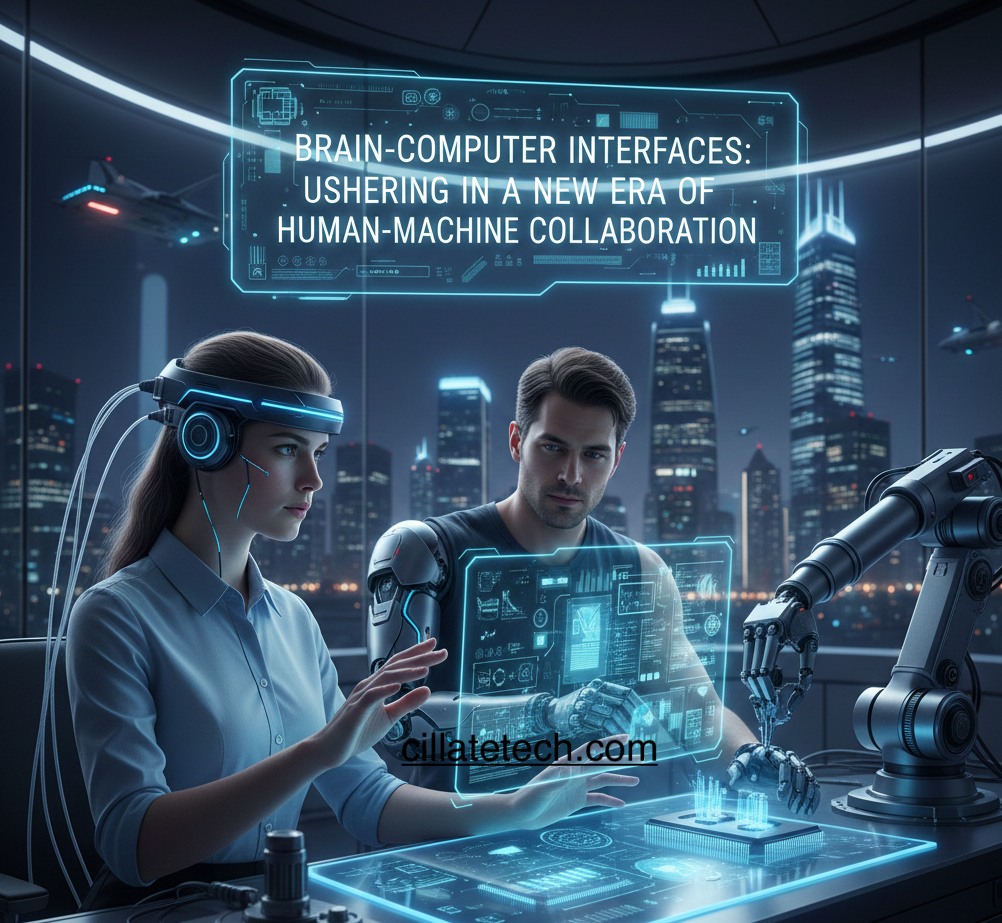
The way humans interact with technology is entering an extraordinary new phase. Brain-Computer Interfaces (BCIs) are transforming the traditional boundaries between mind and machine, enabling communication, control, and collaboration in ways once confined to science fiction. By interpreting neural signals and translating them into actionable commands for devices, BCIs promise to revolutionize healthcare, industry, entertainment, and even everyday personal productivity.
No longer just a research curiosity, BCIs are now being applied in practical contexts, from medical rehabilitation to immersive gaming experiences. This article explores the evolution of BCIs, their technological foundations, real-world applications, potential societal impact, and the ethical considerations shaping this rapidly growing field.
What Are Brain-Computer Interfaces?
A Brain-Computer Interface is a technology that connects the human brain directly to an external system, allowing thoughts to control digital or physical devices. BCIs bypass conventional input tools like keyboards, touchscreens, or voice commands, translating neural activity into digital signals that machines can interpret.
These interfaces rely on neural signals collected through sensors or electrodes. Depending on how these sensors interact with the body, BCIs can be classified as:
- Invasive: Implanted directly into brain tissue for highly precise readings and fast response. Often used in medical contexts, such as assisting paralyzed patients.
- Non-invasive: External sensors placed on the scalp capture electrical activity. Safer and easier to use, though typically less precise.
- Partially invasive: Positioned inside the skull but outside brain tissue, offering a balance between accuracy and safety.
Through signal processing and sophisticated algorithms, BCIs convert brain activity into control commands, opening entirely new possibilities for interaction with machines.
Practical Applications of BCIs
Brain-Computer Interfaces are moving from laboratories into real-world applications, touching healthcare, entertainment, industry, and personal development.
1. Healthcare and Rehabilitation
Medical applications of BCIs are among the most impactful:
- Restoring Movement: BCIs can operate robotic limbs or exoskeletons, enabling patients with paralysis or spinal injuries to regain mobility.
- Communication Tools: Individuals with neurodegenerative conditions, like ALS, can use BCIs to type, speak, or interact with digital devices purely through thought.
- Cognitive and Motor Therapy: Real-time feedback from BCIs helps patients retrain neural pathways, accelerating recovery and enhancing rehabilitation outcomes.
2. Gaming and Immersive Experiences
The entertainment sector is experimenting with BCIs to create entirely new ways to engage users:
- Players can control characters, navigate virtual worlds, and interact with environments using their thoughts.
- BCI-enabled VR headsets and peripherals are designed to heighten immersion and responsiveness, making games feel more intuitive and reactive to the user’s mental state.
3. Industry and Workplace Applications
BCIs are being integrated into professional and industrial settings to enhance efficiency and safety:
- Hands-Free Device Operation: Operators can control machinery, drones, or complex tools without physical input, especially useful in hazardous environments.
- Cognitive Monitoring: BCIs can track focus, fatigue, and mental load, optimizing task assignment and workflow.
- Training Simulations: Employees can improve skills in virtual environments using neurofeedback, increasing retention and performance in high-stakes scenarios.
4. Mental Health and Cognitive Enhancement
Beyond control, BCIs are being explored to monitor, manage, and enhance brain function:
- Mood and Stress Tracking: Non-invasive BCIs can detect stress, anxiety, or mental fatigue, allowing real-time interventions.
- Concentration and Mindfulness: Feedback systems help users improve focus, cognitive clarity, and meditation practices.
- Learning Optimization: Experimental BCIs aim to enhance memory, attention, and learning efficiency through tailored neural feedback.
Technological Drivers Behind BCIs
Several breakthroughs are accelerating the development and adoption of BCIs:
- Artificial Intelligence: Machine learning interprets complex neural signals with increasing speed and precision, enhancing interface responsiveness.
- Miniaturized Sensors: Smaller, wireless, and wearable devices make BCIs more practical for daily use.
- Advanced Neuroimaging: Techniques like fNIRS and high-resolution EEG capture richer neural data for more accurate device control.
- Hybrid Systems: Combining BCIs with eye-tracking, haptic feedback, or electromyography (EMG) creates more intuitive and immersive control systems.
Ethical and Privacy Considerations
The rapid advancement of BCIs raises critical ethical and security questions:
- Neural Data Security: Brain data is deeply personal, requiring robust protections against hacking and misuse.
- Consent and Transparency: Users must understand what data is collected, how it’s used, and potential long-term implications.
- Cognitive Influence: The possibility of manipulating thoughts or behavior through BCIs presents ethical dilemmas.
- Equitable Access: Ensuring broad availability is key to preventing a divide between users with advanced neural capabilities and those without.
As BCIs become more widespread, ethical guidelines, regulations, and standards will be essential to safeguard users and society.
The Future of Human-Machine Interaction
BCIs have the potential to fundamentally redefine how we interact with technology:
- Direct Thought Communication: BCIs could replace keyboards, touchscreens, and even voice commands, enabling thought-to-text and direct device control.
- Integration with AI: Future BCIs could allow humans to interface directly with AI, enhancing decision-making and problem-solving capabilities.
- Fully Immersive Experiences: VR and AR environments could become entirely brain-driven, providing unprecedented immersion.
- Collaborative Neurotechnology: Teams could share cognitive states or intentions in real time, revolutionizing group work and complex problem-solving.
The long-term impact of BCIs could extend to creating new industries, enhancing human abilities, and redefining the relationship between cognition and technology.
Challenges Ahead
Despite their potential, BCIs face several hurdles:
- Signal Reliability: Non-invasive systems are susceptible to noise and less precise control.
- Medical Risks: Invasive devices carry surgical and long-term safety considerations.
- Cost Barriers: High development and implementation costs limit access.
- Regulatory Frameworks: Standards for privacy, safety, and interoperability are still evolving.
Overcoming these challenges will determine whether BCIs move from experimental tools to mainstream technology.
Real-World Examples
Several initiatives and companies highlight BCI progress:
- Neuroprosthetic Programs: Hospitals in Europe and North America are piloting BCIs for restoring mobility in paralyzed patients.
- Gaming Innovation: Startups are developing thought-controlled VR games, enhancing immersion and responsiveness.
- Industrial Applications: Tech companies are deploying BCIs for cognitive monitoring and remote machinery control in specialized industrial environments.
These early adopters demonstrate the versatility and transformative potential of BCIs across sectors.
Looking Ahead
BCIs are on track to reshape the interface between humans and technology. Over the next decade, we can expect:
- Wider adoption in healthcare, enabling personalized rehabilitation and enhanced accessibility.
- Integration into consumer tech, including gaming, smart devices, and productivity tools.
- Collaboration with AI to enhance human cognitive capabilities and decision-making.
- Ethical frameworks and standards that ensure safety, privacy, and equitable access.
The potential of BCIs extends far beyond controlling machines. They represent a shift toward direct mind-to-technology interaction, opening possibilities for creativity, learning, productivity, and communication that were previously unimaginable.
Ultimately
Brain-Computer Interfaces are poised to redefine human-machine collaboration. From medical rehabilitation to immersive gaming, workplace efficiency, and cognitive enhancement, BCIs offer unprecedented opportunities to bridge mind and machine. While ethical, privacy, and technical challenges remain, ongoing advancements suggest a future where thoughts alone can control devices, interact with AI, and reshape how we live, work, and play.
As BCIs continue to evolve, they are not just technological tools—they are a gateway to a new dimension of human capability, fundamentally transforming how we interact with the digital world.