Redefining Wealth
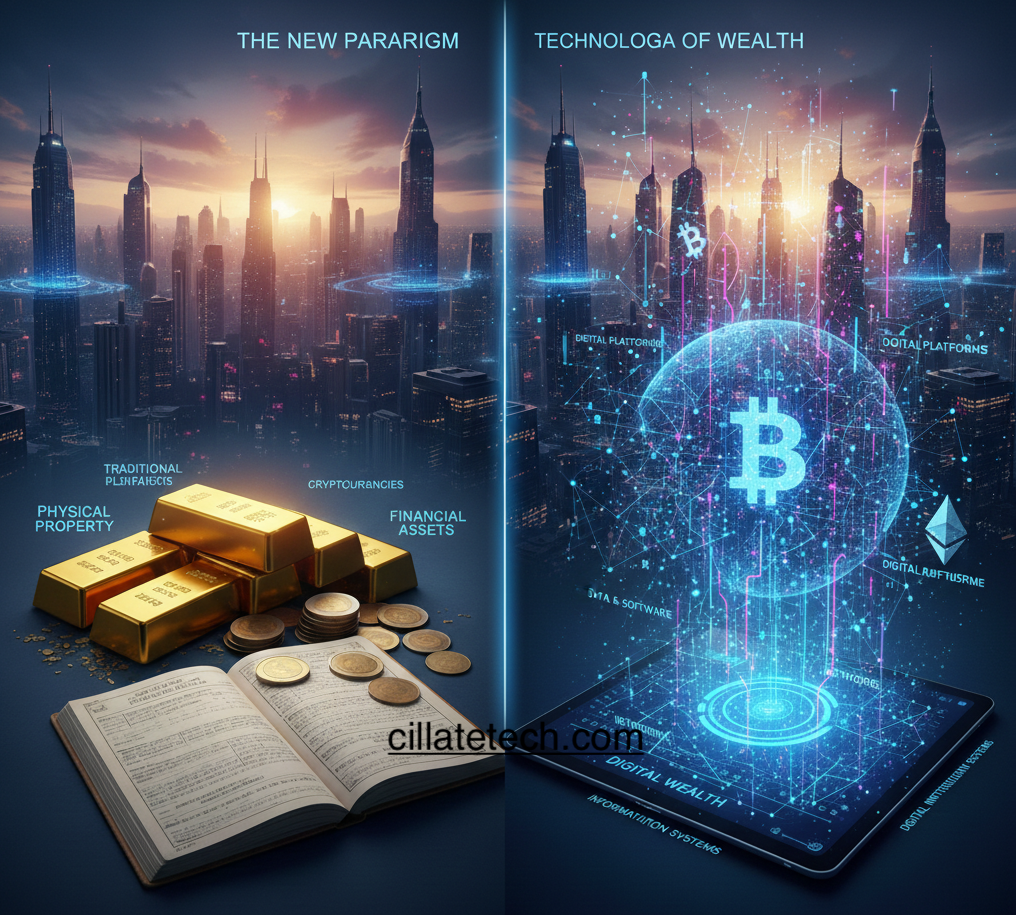
For centuries, wealth was measured through tangible assets such as land, gold, and currency. Estates symbolized status, gold preserved value, and cash provided liquidity, forming the foundation of traditional economic power. Today, however, the definition of wealth is evolving. Digital technologies, connectivity, and automation have created new forms of value, shifting attention from physical property to digital platforms, algorithms, and blockchain systems. This transformation is redefining how value is stored, leveraged, and multiplied in the modern economy.
The Enduring Role of Traditional Assets
Traditional assets continue to play an important role in wealth creation. Real estate offers stability and long-term appreciation, generating income through rent and acting as collateral. Gold has preserved value across generations due to its scarcity and universal recognition, while cash ensures immediate liquidity and facilitates trade. However, these assets come with limitations: property is capital-intensive and geographically fixed, gold is largely passive, and cash is vulnerable to inflation and economic fluctuations. While still relevant, traditional assets alone no longer dominate the pathways to modern prosperity.
The Emergence of Technological Capital
Technological capital—comprising digital platforms, cryptocurrencies, data, software, and intellectual property—represents a fundamentally different form of wealth. Unlike physical assets, technological capital is intangible, scalable, and globally accessible. Digital platforms and web infrastructure function like modern commercial real estate, generating revenue through subscriptions, advertisements, and transactions while reaching audiences worldwide without geographic limitations. Cryptocurrencies and blockchain systems redefine money and ownership, enabling decentralized finance, tokenized assets, and programmable smart contracts. Data itself has become a productive asset, powering artificial intelligence and predictive analytics, while software and algorithms scale rapidly, often serving millions of users at minimal additional cost.
Why Technological Capital Is Accelerating
Several factors are accelerating the shift toward technological wealth. Global connectivity allows entrepreneurs to access international markets without physical infrastructure. Network effects amplify growth, as platforms become more valuable with each new user. Starting a digital venture requires lower capital than purchasing real estate or gold, and younger generations increasingly trust and invest in digital and decentralized technologies. Compared to traditional assets, technological capital is intangible, highly scalable, minimally constrained by geography, and often more liquid, while offering rapid growth potential alongside flexibility and adaptability in a digital economy.
Risks and Challenges
Despite its promise, technological capital carries unique risks. Digital assets, particularly cryptocurrencies, can be highly volatile. Regulatory frameworks are still evolving, creating uncertainty for investors and businesses. Cybersecurity threats pose risks to data and software infrastructure, and rapid technological change can render digital platforms or systems obsolete. Navigating this landscape requires agility, informed decision-making, and strategic risk management.
The Future of Wealth
Looking forward, wealth is likely to integrate both traditional and technological forms. Tokenized real estate, decentralized finance ecosystems, AI-driven investments, and hybrid models that combine physical and digital assets will increasingly shape economic landscapes. The line between tangible and digital wealth will blur, creating innovative ownership structures and value networks.
Wealth today is no longer measured solely by physical property or money. While real estate, gold, and cash remain important, technological capital—digital platforms, cryptocurrencies, data, and software—is becoming central to economic growth and prosperity. The modern economy values networks, digital infrastructure, and information systems, marking a structural shift in how wealth is created, preserved, and leveraged. Embracing this new paradigm will define the next era of financial innovation and opportunity.