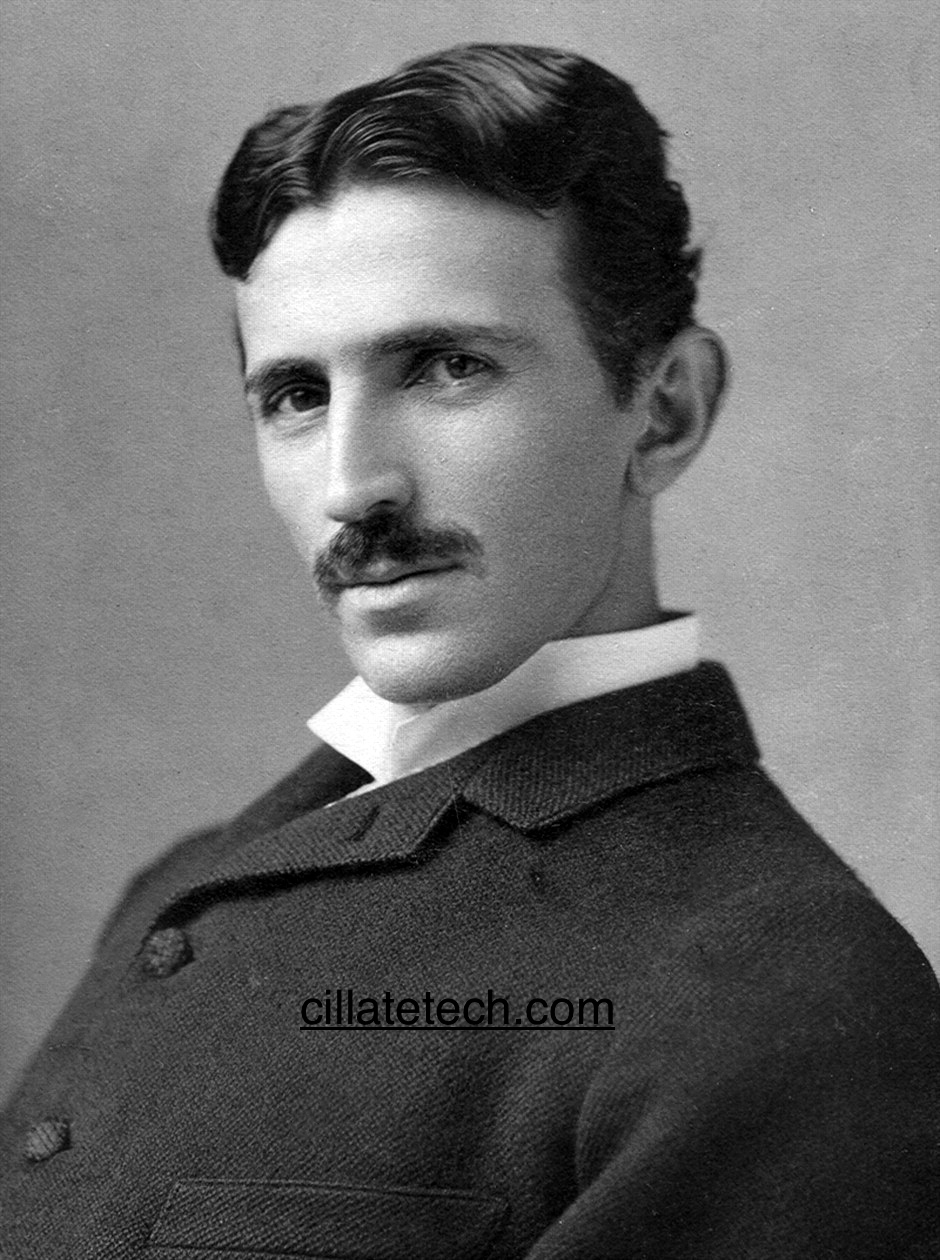
Nikola Tesla’s name is forever associated with imagination, electricity, and bold scientific vision. A thinker far ahead of his era, Tesla devoted his life to exploring ideas that would later become essential to modern civilization. His journey was marked by extraordinary intellectual achievements, intense rivalries, financial instability, and a quiet final chapter that contrasted sharply with the brilliance of his earlier accomplishments.
Tesla’s life is not merely the story of an inventor—it is the story of a visionary whose ideas helped power the modern world.
Early Years: The Formation of a Brilliant Mind
Nikola Tesla was born on July 10, 1856, in the village of Smiljan, located in what was then part of the Austrian Empire. He was raised in a Serbian family that valued education, discipline, and spirituality. His father, a Serbian Orthodox priest, encouraged intellectual development, while his mother—though formally uneducated—possessed remarkable mechanical ingenuity. She created practical household tools and devices, demonstrating a natural inventiveness that deeply influenced young Nikola.
From childhood, Tesla displayed exceptional cognitive abilities. He had a vivid imagination and an extraordinary capacity to mentally visualize mechanical systems in precise detail. Rather than relying heavily on sketches, he often designed entire machines in his mind, refining them through visualization before physically constructing them. This rare mental discipline became one of his defining strengths.
Tesla studied engineering and physics in Europe, attending institutions in Graz and Prague. Though he did not complete a formal degree, his academic exposure strengthened his understanding of mathematics, electromagnetism, and mechanical systems. More importantly, he developed a lifelong passion for solving complex scientific challenges.
A New Beginning in America
In 1884, Tesla emigrated to the United States with little more than determination and a letter of recommendation. He arrived in New York City eager to apply his knowledge in a rapidly industrializing nation. Soon after his arrival, he began working for Thomas Edison, whose direct current (DC) electrical systems were then the dominant technology.
However, differences in engineering philosophy quickly emerged. Edison favored practical, incremental improvements, while Tesla focused on theoretical elegance and long-distance efficiency. Tesla was convinced that alternating current (AC) offered significant advantages over DC for transmitting electricity across vast distances.
After leaving Edison’s company, Tesla partnered with industrialist George Westinghouse. This alliance led to the widespread development and implementation of AC power systems. What followed became known as the “War of Currents”—a highly publicized rivalry between AC and DC systems.
Tesla’s AC technology ultimately proved more efficient and adaptable. Its adoption transformed power distribution worldwide and established the framework for modern electrical grids. This milestone alone secured Tesla’s place among history’s most influential engineers.
Major Innovations and Scientific Contributions
Tesla’s impact extended far beyond the alternating current system. His inventive mind produced numerous groundbreaking technologies and concepts:
1. The Tesla Coil
Developed in the 1890s, the Tesla Coil became a critical component in early radio transmission experiments and high-voltage research. It remains a recognizable symbol of electrical experimentation even today.
2. Hydroelectric Power at Niagara Falls
One of Tesla’s most celebrated achievements was the successful harnessing of hydroelectric power at Niagara Falls using AC technology. This project demonstrated the practical scalability of alternating current and marked a defining moment in renewable energy history.
3. Foundations of Radio Communication
Although Guglielmo Marconi is often credited with pioneering radio, later legal decisions recognized that Tesla’s earlier patents contributed significantly to the development of wireless communication. His experiments laid groundwork that influenced modern broadcasting.
4. Wireless Transmission Concepts
Tesla envisioned a world interconnected by wireless communication and even wireless energy transmission. Through the Wardenclyffe Tower project on Long Island, he attempted to build a global system capable of transmitting signals—and potentially power—without wires.
Though ambitious and visionary, this project required financial backing that proved difficult to sustain.
Visionary Thinking and Financial Instability
Tesla’s career illustrates the tension between innovation and commercialization. Unlike many industrialists of his time, Tesla was not primarily driven by profit. He was motivated by scientific discovery and the dream of improving humanity through technology.
Early in his partnership with Westinghouse, Tesla sold rights to his AC patents. While this agreement provided temporary financial stability, it limited his long-term wealth accumulation. His later ventures, including Wardenclyffe Tower, depended heavily on investors such as J.P. Morgan. When funding was withdrawn, progress stalled.
The dismantling of Wardenclyffe Tower symbolized not only the end of a project but also the challenge of sustaining visionary experiments in a market-driven environment.
As newer inventors and technologies gained public attention, Tesla struggled to maintain consistent funding for his research. Although respected, he found it increasingly difficult to translate bold theoretical ideas into commercially viable enterprises.
Personal Discipline and Solitude
Tesla’s dedication to science shaped his personal life. He maintained strict routines and devoted nearly all his time to intellectual pursuits. He often worked long hours with minimal rest and paid meticulous attention to detail.
He chose not to marry, believing that personal attachments might interfere with his scientific focus. In later years, he became known for his affection toward pigeons in New York City, which reflected both his gentle nature and growing isolation.
While he continued to propose innovative concepts—including ideas about radar-like systems and energy technologies—many of these were not fully developed or funded during his lifetime.
Recognition and Final Years
By the 1930s, Tesla was living modestly in New York hotels. Though he occasionally received awards and birthday tributes recognizing his contributions, much of his pioneering work had already become integrated into society without widespread public acknowledgment of his role.
On January 7, 1943, Nikola Tesla passed away in his hotel room in New York City at the age of 86. His passing marked the quiet conclusion of a life filled with bold ambition and transformative ideas.
In the decades that followed, historians and scientists revisited his patents and research papers. Renewed appreciation elevated his reputation as a foundational figure in electrical engineering and technological progress.
Enduring Legacy
Today, Tesla’s name carries global recognition. The unit of magnetic flux density—the tesla—is named in his honor. His contributions underpin modern electrical infrastructure, wireless communication systems, and countless technological advancements.
What makes Tesla’s life compelling is not solely his scientific genius but the complexity of his journey. He achieved milestones that reshaped civilization, yet he faced hardships that reflected the challenges of pioneering ideas ahead of widespread acceptance.
His story serves as a reminder that innovation often demands perseverance, resilience, and vision beyond immediate reward.
Lastly, Nikola Tesla’s life of innovation stands as a powerful narrative of imagination, determination, and intellectual courage. From transforming the way electricity is distributed to envisioning wireless global communication, his contributions remain woven into the fabric of modern life.Though his closing chapter was quieter than the intensity of his early triumphs, his ideas continue to illuminate the world—quite literally.Tesla’s journey reflects both the heights of human creativity and the complexities faced by those who dare to think beyond their time.