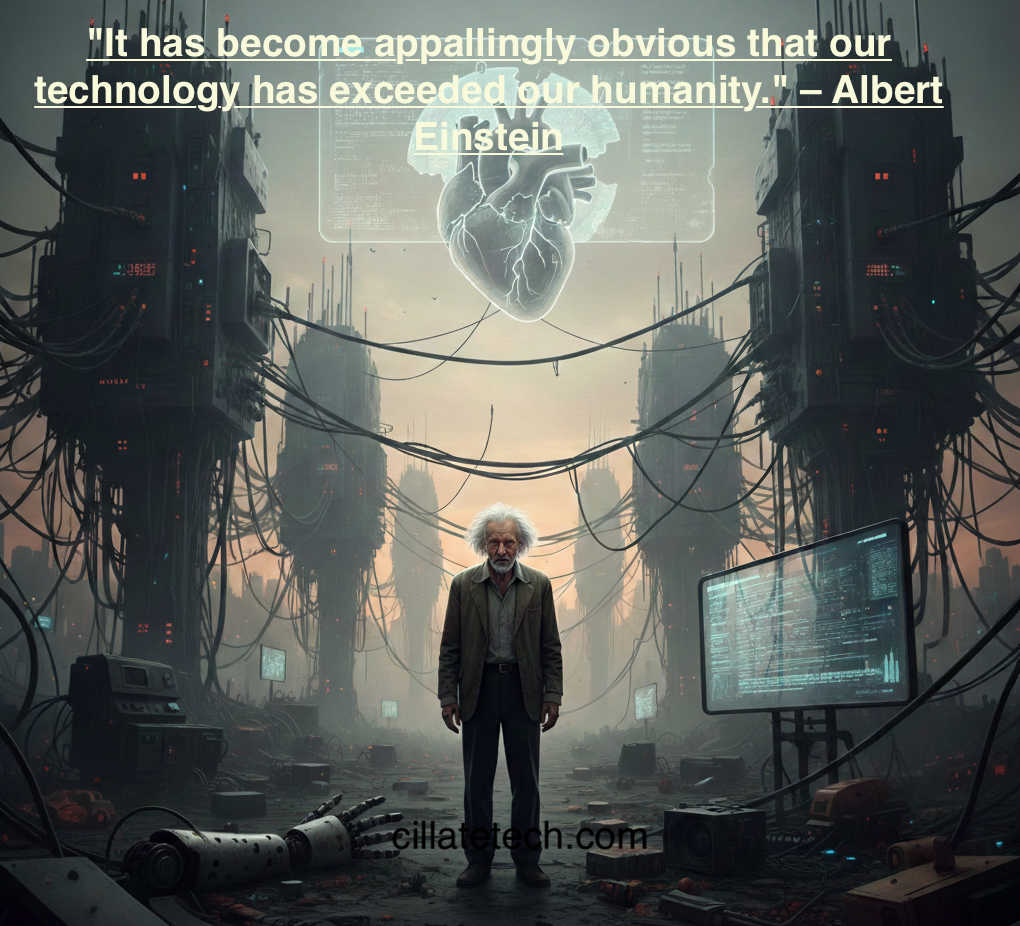
“It has become appallingly obvious that our technology has exceeded our humanity.” – Albert Einstein
In 2026, the significance of Einstein’s observation reverberates with greater urgency. Our society is increasingly driven by sophisticated machines, from AI algorithms to industrial humanoid robots revolutionizing manufacturing. We are advancing technology to be smarter, faster, and more capable, yet in our pursuit of efficiency and innovation, we must ask ourselves: are we losing the very values that define our humanity?
The Rise of Smarter Machines
Artificial intelligence and robotics have transitioned from the realm of science fiction to an integral part of our daily lives. Humanoid robots in manufacturing, AI assistants in corporate environments, and autonomous systems in transportation are no longer mere visions of the future—they are transformative tools reshaping our work and lifestyle. These innovations are faster, more accurate, and adept at performing tasks that once required human expertise.
Particularly noteworthy are industrial humanoids, which are gaining attention for their reliability and efficiency. Unlike earlier, more interactive robots like Pepper or Sophia, which focused on social engagement, today’s industrial humanoids are engineered to integrate smoothly into established workflows. They enhance productivity, minimize errors, and adapt to structured environments without requiring emotional connection or constant attention.
When Efficiency Outpaces Humanity
The challenge we face is not one of technology; rather, it lies within ethical and societal realms. As machines evolve at a rapid pace, our grasp of human values often lags. With automation taking over routine responsibilities and AI making decisions traditionally reserved for people, essential qualities like empathy, creativity, and moral judgment risk being overlooked. This encapsulates Einstein’s warning: our technological prowess may outpace our wisdom.
For instance, while Sophia became renowned for her conversational skills, her design had little impact on real-world efficiency or decision-making. In contrast, the unembellished industrial humanoids in factories are quietly transforming production—not by evoking emotion, but by yielding tangible results. This shift reveals a crucial insight: machines perform best when optimized for efficiency, while humanity flourishes when ethics, empathy, and accountability are prioritized.
Bridging the Gap Between Machines and Humanity
Achieving harmony in a technology-driven landscape necessitates intentional choices. Technology should not supplant human values; rather, it should enhance them. Organizations, developers, and policymakers must place ethical considerations on par with technical advancements. Key principles to guide this endeavor include:
- Human-Centered Design: Create machines that support human well-being, not solely efficiency.
- Ethical AI Development: Ensure that decision-making algorithms embody fairness, transparency, and accountability.
- Education and Skills Development: Equip individuals to collaborate with intelligent machines, focusing on creativity, critical thinking, and emotional intelligence.
- Sustainable Innovation: Evaluate the long-term societal implications of automation, beyond short-term productivity enhancements.
By intentionally infusing our technological approach with humanistic values, we can leverage the advantages of advanced machines without compromising the principles that define us.
The Future: Collaboration, Not Competition
The forthcoming decade will not be characterized by a struggle between machines and humans; instead, it will be defined by collaboration between the two. Industrial humanoids, AI systems, and automation can liberate humans from monotonous tasks, creating more opportunities for creativity, empathy, and innovation.
Smarter machines need not diminish our humanity. On the contrary, they present a unique opportunity to elevate our capabilities—if we integrate ethics and values into every facet of technological development.
Einstein’s cautionary words remain profoundly relevant: as technology accelerates, our humanity must not lag behind. The emergence of smarter machines is inevitable; cultivating softer values is a conscious choice. By prioritizing human-centered innovation, ethical frameworks, and sustainable development, we can ensure that advancements in AI and robotics serve to strengthen society rather than diminish it.
The fundamental question for every technologist, business leader, and citizen is clear: Are we developing smarter machines at the expense of our humanity—or in harmony with the values, empathy, and ethical principles that define what it means to be human?