In most countries, the electric vehicle (EV) revolution is primarily about reducing carbon emissions and transitioning away from fossil fuels. In Singapore, however, the story is more layered. It is not just a question of sustainability—it is a matter of space, cost, infrastructure, and urban survival. In one of the most densely populated nations in the world, where land is a scarce and highly managed resource, the transition to electric mobility presents both remarkable opportunities and complex challenges.
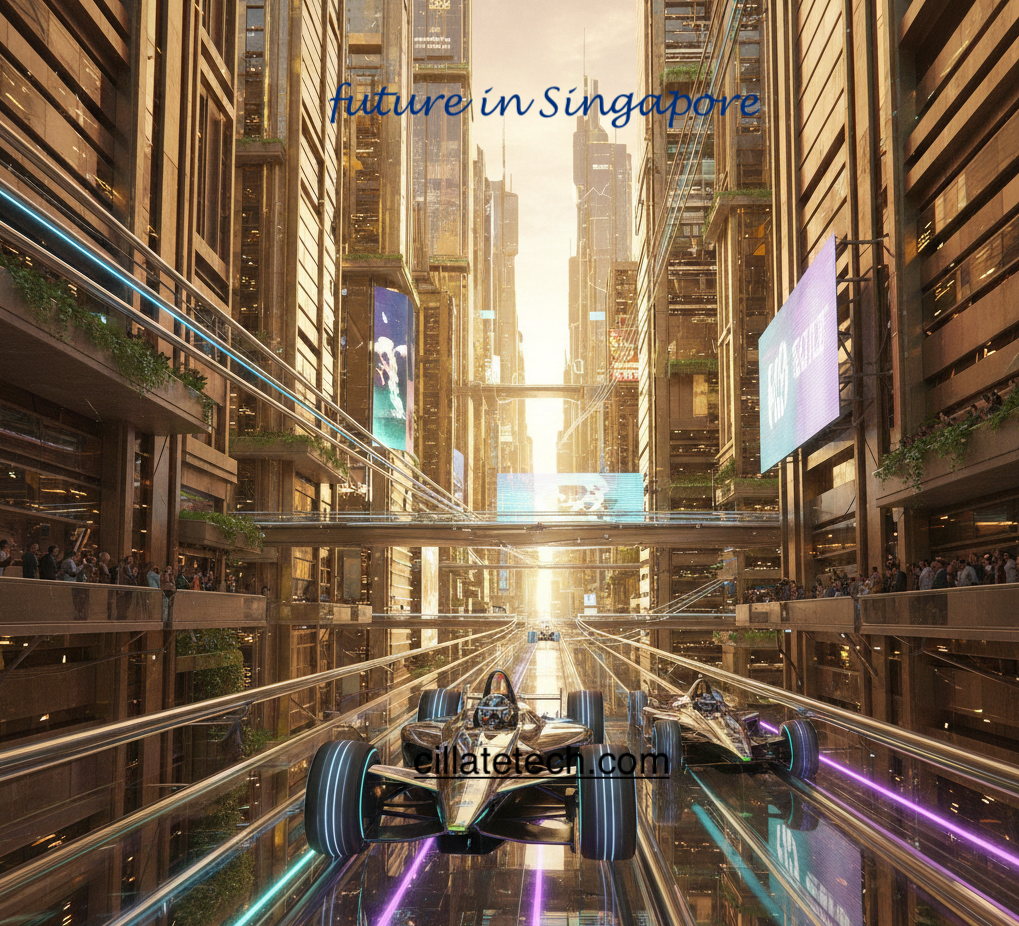
As governments worldwide accelerate the shift toward cleaner transportation, Singapore finds itself navigating a unique balancing act: promoting electric vehicles while continuing to discourage excessive car ownership. In a city where every square meter counts, the EV race is not simply about replacing engines—it is about reimagining mobility within tight physical constraints.
A Mobility Model Built on Control
Unlike many larger nations, Singapore has long maintained strict policies to regulate car ownership. Through systems such as the Certificate of Entitlement (COE) and high vehicle taxes, the government controls the number of cars on the road. These measures were designed decades ago to prevent traffic congestion and optimize limited land.
This approach fundamentally shapes the electric vehicle transition. In many markets, governments encourage widespread EV adoption by lowering ownership barriers. In Singapore, policymakers must encourage electrification without undermining long-standing efforts to limit vehicle numbers.
The goal, therefore, is not to increase car ownership—but to ensure that the vehicles already on the road gradually become cleaner and more sustainable.
Sustainability Ambitions and Climate Commitments
Singapore has committed to reducing emissions and advancing green initiatives as part of its broader sustainability roadmap. Transportation accounts for a significant share of urban emissions, making electrification a key component of national climate targets.
Electric vehicles align with these ambitions by eliminating tailpipe emissions and reducing air pollution in dense urban environments. Cleaner air is particularly valuable in compact cities where residential, commercial, and industrial zones exist in close proximity.
However, sustainability in Singapore is multifaceted. EVs must be integrated in a way that complements public transport systems, cycling infrastructure, and walkable urban planning. Electrification alone cannot solve congestion or land-use constraints.
Charging Infrastructure in a Land-Scarce Environment
One of the most pressing challenges in Singapore’s EV transition is charging infrastructure deployment. Unlike suburban countries where homeowners can install private chargers, most residents in Singapore live in high-rise public housing developments.
This creates a logistical puzzle: how to provide widespread, convenient charging access without consuming excessive space. Car parks must accommodate charging stations while maintaining efficient traffic flow. Electrical grids must handle increased load demands without compromising reliability.
The government has responded by rolling out public charging networks across residential estates, commercial buildings, and transport hubs. Partnerships with private operators accelerate deployment. Yet scaling this infrastructure requires careful coordination between urban planners, utility providers, and property managers.
Space limitations mean that infrastructure expansion must be strategic, not sprawling.
The Cost Equation
Electric vehicles often come with higher upfront costs compared to conventional vehicles. In Singapore, where vehicle ownership is already expensive due to taxes and COE premiums, affordability becomes a central issue.
To encourage adoption, authorities have introduced incentives, rebates, and tax adjustments to narrow the price gap between electric and internal combustion vehicles. These financial measures aim to make EVs competitive without fundamentally altering the regulated ownership framework.
However, economic considerations extend beyond purchase price. Consumers evaluate charging accessibility, maintenance costs, battery lifespan, and resale value. Clear policy signals and stable incentives are essential to build long-term consumer confidence.
Public Transport as the Backbone
Singapore’s transportation philosophy prioritizes public transit as the primary mode of mobility. The Mass Rapid Transit (MRT) system and bus networks form the backbone of daily commuting.
In this context, electric vehicles serve as a complement rather than a replacement. Electrifying buses and taxi fleets may have a greater environmental impact than increasing private EV ownership. Fleet electrification reduces emissions at scale while maintaining efficient land use.
By focusing on electrifying shared mobility services, Singapore can maximize sustainability benefits without encouraging excessive private car dependence.
Technological Innovation and Smart Mobility
Singapore’s ambition extends beyond electrification—it includes becoming a leader in smart mobility solutions. EV adoption is intertwined with digital technologies such as intelligent traffic management, vehicle-to-grid systems, and autonomous driving trials.
Smart charging systems can optimize energy consumption during off-peak hours, reducing strain on the grid. Data analytics improve traffic flow and charging station allocation. Integration with renewable energy sources enhances overall sustainability.
In a highly connected urban ecosystem, EVs are not isolated machines—they are components of a broader intelligent transport network.
Energy Considerations and Grid Capacity
Electrification shifts emissions from tailpipes to power plants. Therefore, the environmental benefits of EVs depend partly on the energy mix. Singapore relies significantly on natural gas for electricity generation, though it continues exploring renewable and low-carbon energy sources.
Expanding EV adoption increases electricity demand. Managing this demand requires grid upgrades, energy storage solutions, and efficient load balancing systems. Policymakers must ensure that electrification does not compromise energy security or affordability.
Long-term planning involves aligning EV growth with clean energy development, creating a cohesive low-carbon ecosystem.
Consumer Behavior and Cultural Shifts
Car ownership in Singapore is often viewed as both a convenience and a status symbol, given its high cost. Transitioning to electric vehicles requires shifting perceptions from novelty to practicality.
Public awareness campaigns, pilot programs, and visible infrastructure contribute to normalizing EV use. As charging stations become more common and vehicle models diversify, consumer hesitation gradually decreases.
Nevertheless, behavioral change takes time. Concerns about range, charging convenience, and resale value persist among some buyers. Transparent information and consistent policy support remain crucial.
Regional Competition and Industry Opportunities
Across Southeast Asia, governments are competing to attract EV manufacturing, battery production, and clean mobility investments. Singapore’s limited land area makes large-scale vehicle manufacturing unlikely. Instead, the nation positions itself as a regional hub for EV research, testing, and innovation.
Financial institutions, logistics firms, and technology companies headquartered in Singapore play roles in shaping regional EV ecosystems. By leveraging its strengths in finance, governance, and connectivity, Singapore can influence the broader electric mobility landscape without dominating production capacity.
Challenges Unique to Density
Urban density magnifies both advantages and constraints. Short travel distances make EV range less of a concern. However, dense living arrangements complicate charger installation and parking management.
Road congestion remains tightly controlled. Simply replacing petrol vehicles with electric ones does not reduce traffic volume. Thus, EV policies must remain aligned with congestion management strategies.
Balancing environmental benefits with spatial efficiency defines Singapore’s EV equation.
The Road Ahead
Singapore’s target to phase out internal combustion engine vehicles over time signals long-term commitment. Yet achieving this transformation requires coordinated action across multiple domains:
- Expanding accessible and efficient charging networks.
- Ensuring energy systems can support rising demand.
- Maintaining affordability through incentives and tax structures.
- Encouraging fleet electrification for maximum impact.
- Integrating EVs into a broader smart mobility ecosystem.
Success will depend on sustained policy consistency and adaptive planning.
Ultimately
The electric vehicle race in a city where space is gold is not a straightforward sprint—it is a carefully calibrated journey. In Singapore, electrification must coexist with strict vehicle controls, limited land resources, and a strong public transport foundation.
Rather than pursuing mass car adoption, the nation’s strategy emphasizes cleaner vehicles within a controlled ownership model. Infrastructure deployment, energy management, and technological integration must all align with spatial realities.
Ultimately, Singapore’s EV transition reflects its broader development philosophy: pragmatic, forward-looking, and tightly managed. In a landscape defined by scarcity, innovation becomes not just an advantage—but a necessity.
If Singapore can harmonize sustainability, infrastructure, and urban efficiency, it may not only win its own electric vehicle race but also set an example for other densely populated cities navigating similar challenges.